Service Dog Harness with Handle | Emergency Ready | YAP Stores
Why Service Dogs Need Engineered Harness Design
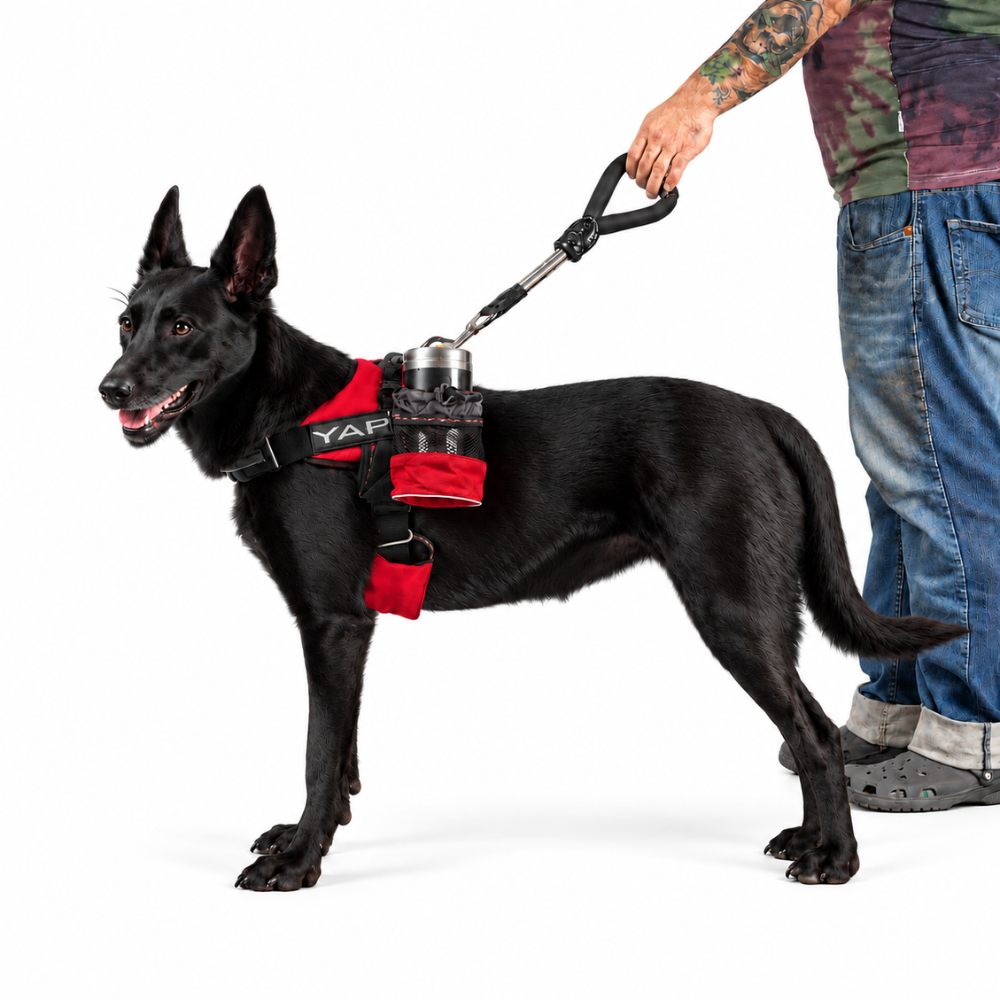
Service dogs work all day. They guide their handlers through crowded spaces, navigate stairs and curbs, and respond to medical alerts during critical moments. Their harness must do far more than attach a leash. It must distribute weight evenly, protect vital organs, provide emergency lift capability, and stay comfortable during eight or more hours of daily use.
A quality service dog harness becomes an extension of your dog's working equipment. The difference between basic harnesses and engineered designs determines whether your service dog stays comfortable and protected or develops strain injuries from repetitive pulling and pressure concentration. This matters more for working dogs than for any other role. According to the American Kennel Club guidelines for service dogs, proper equipment selection is critical for handler safety and dog wellbeing.
Key Point: Service dogs working in public spaces face different demands than pets at home. Your harness must provide emergency lift capability, distribute load evenly across the frame, regulate temperature during indoor and outdoor transitions, and remain comfortable throughout extended working periods. Engineered harnesses meet these demands. Basic designs create unnecessary strain.
Why an Emergency Handle Matters Most
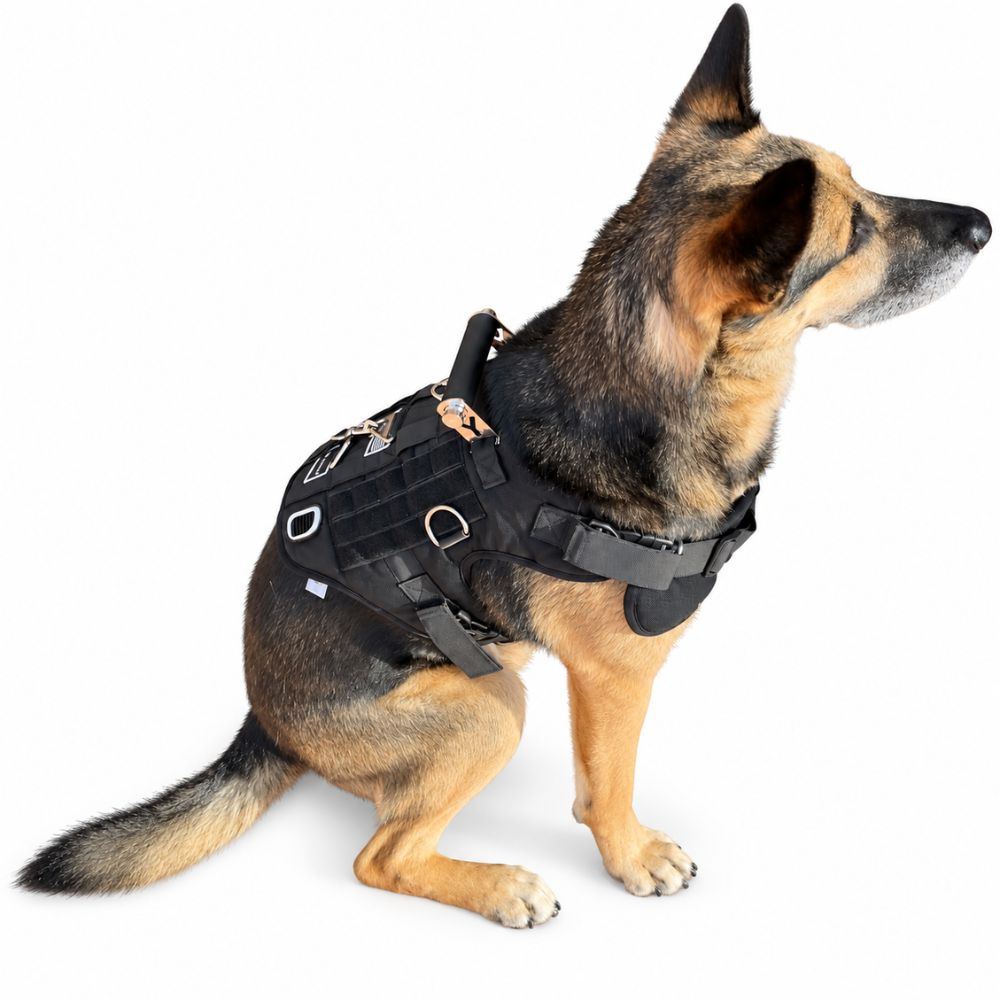
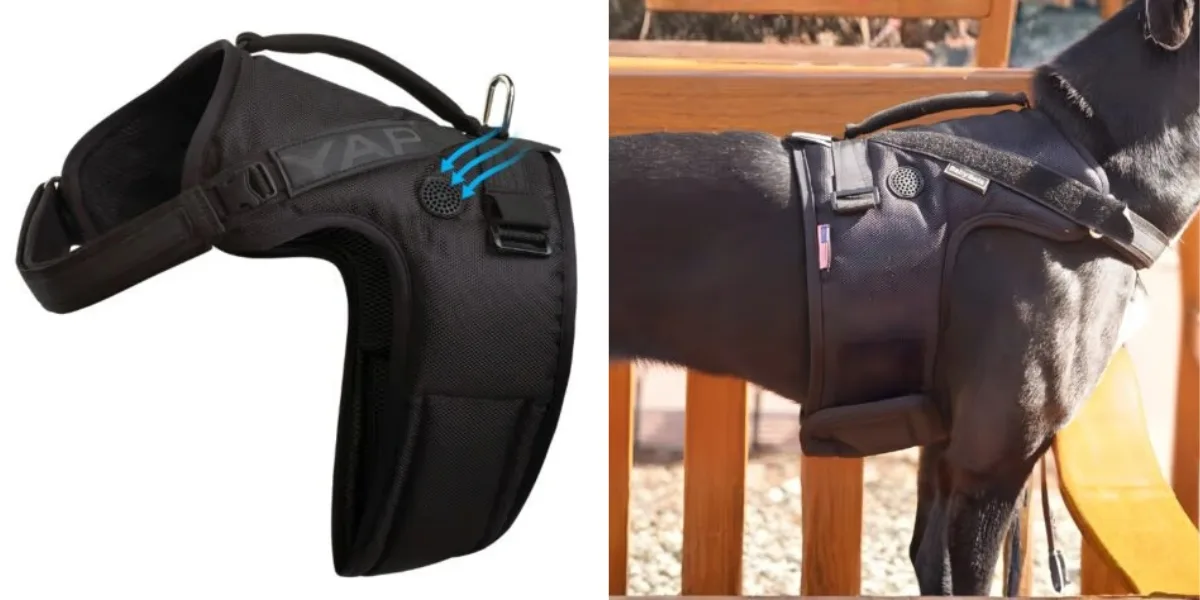
The emergency handle is where service dog harnesses differ fundamentally from basic pet designs. A built-in handle lets you lift your service dog safely without applying any pressure to the neck or throat. In crowded public spaces, stairwell transitions, or unexpected medical situations, this capability becomes essential. You need to guide your dog quickly without choking or throat strain.
A dog harness with a handle allows quick directional adjustments when your dog startles or encounters unexpected triggers. The handle construction must be reinforced to safely support your dog's full weight. This is not an afterthought feature. It is core engineering that separates working harnesses from casual pet equipment.
Service dogs also need harnesses that protect against specific health vulnerabilities. Collapsing trachea is a serious concern in many service dog breeds, as detailed by veterinary professionals at the Veterinary Partner for tracheal collapse information. A harness for collapsing trachea distributes load away from the throat, protecting the airway and allowing full breathing capacity during working hours. This becomes critical for dogs working in high-stress or high-activity environments.
How Engineered Harnesses Protect Your Service Dog
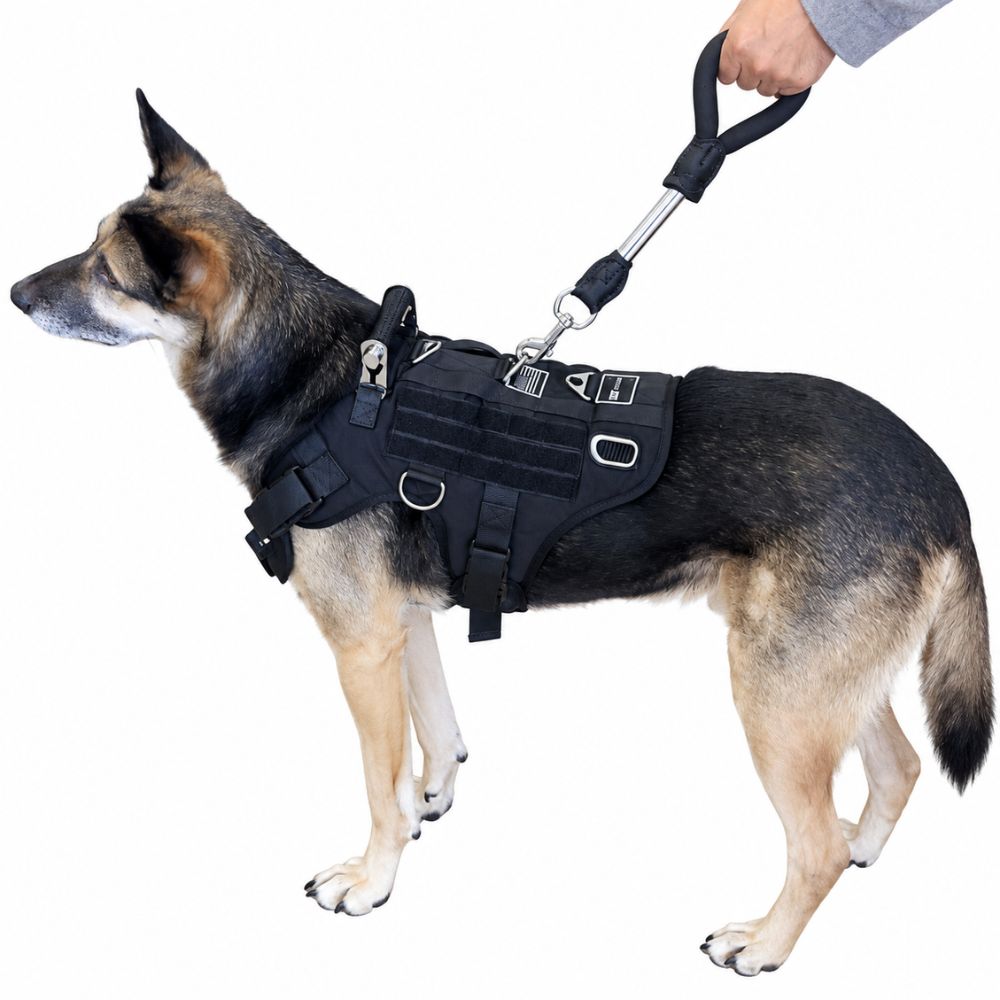
The fundamental principle behind service dog harness engineering is pressure distribution. When your dog pulls or you need to guide them, force must spread across the chest and shoulders, the strongest parts of the frame. Load concentration on the throat creates long-term damage to the trachea, thyroid, and major blood vessels. Over months of working, this repeated strain causes lasting injury.
Engineered harnesses use curved buckles that sit flat against the body, preventing rubbing and irritation during all-day wear. The straps themselves must flex with your dog's movement rather than creating rigid pressure points. NASA certified Outlast fabric provides thermal regulation, keeping your service dog comfortable as they transition between indoor air conditioning and outdoor weather. Temperature stability reduces stress and keeps your dog focused on their job.
Material Quality for Durability
Service dogs work daily. The harness must withstand years of intense use without degrading. YAP harnesses use reinforced stitching and hardware tested under load. Every connection point and strap receives professional construction. This durability means your service dog's equipment remains reliable through years of professional work.
Sizing Your Service Dog Harness Correctly
Service dogs range from small assistance animals to large mobility support dogs. Proper sizing means your harness works with your dog's frame rather than against it. Measure your dog's chest girth at the widest point behind the front legs. This measurement guides size selection more reliably than breed assumptions.
A harness with a handle must fit snugly enough to stay centred during movement but loose enough to allow comfortable breathing. The two-finger rule applies after fitting. Slide two fingers under any strap with firm resistance. Curved buckles should sit flat against the body without pressing into skin. For service dogs, this fit precision prevents the irritation that could affect their focus or comfort during working hours.
- Measure chest girth at the widest point behind front legs
- Use a soft flexible tape measure for accurate measurement
- Prioritize girth measurement over neck measurement
- Apply two-finger rule to all adjustment straps
- Ensure curved buckles sit flat without skin pressure
- Test that you cannot pull harness over the head
- Confirm emergency handle positioning for quick access
Service Dogs Working in Hot Weather
Many service dogs work in warm climates or spend hours in outdoor environments. Heat stress compounds the physical demands of working hours. A harness for hot weather collapsing trachea addresses both thermal regulation and breathing protection. NASA Outlast fabric stores and releases heat precisely, keeping your dog comfortable regardless of season or environment.
Overheating compromises service dog performance and creates health risks. Thermal regulation prevents the body temperature spikes that affect focus and physical capability. For service dogs working multiple hours daily, this thermal stability becomes as important as load distribution or emergency handle capability.
Service Dog Harness Features Comparison
| Feature | Basic Pet Harness | Working Dog Harness | Service Dog Harness |
|---|---|---|---|
| Emergency Handle | Not included | Optional | Reinforced standard |
| Trachea Protection | Basic design | Moderate protection | Engineered protection |
| Thermal Regulation | Standard fabric | Improved fabric | NASA Outlast tech |
| All-Day Comfort | Limited hours | Extended hours | Full 8+ hours |
| Pressure Distribution | Concentrated | Spread design | Engineered geometry |
| Load Capacity | Limited range | Wide range | 8 to 175 lbs |
| Durability Testing | Standard | Heavy-duty | Professional load testing |
| Made in USA | Variable | Often imported | Reinforced stitching |
Getting Your Service Dog Comfortable with Harness Work
Service dogs must acclimate to harness wear during their training phases. Start with short sessions and gradually extend duration as your dog adjusts to the equipment. Let your dog sniff and inspect the harness before first fitting. Positive associations with putting on and wearing the harness make long-term comfort possible.
The emergency handle should become part of your service dog's training from the beginning. Your dog learns that handle contact means responsive guidance. This training foundation ensures your dog responds naturally to emergency handle guidance when real situations require quick directional changes or lift assistance.
Maintaining Your Service Dog Harness
Service dog harnesses receive daily use. Proper maintenance extends lifespan and maintains engineering effectiveness. Hand wash or gently machine wash in cold water using only mild pet safe detergent. Harsh chemicals degrade thermal regulation properties. Air dry flat away from direct sunlight or heat sources to maintain shape and performance. Never tumble dry as high heat damages the Outlast thermal layer.
Inspect the emergency handle, curved buckles, and all stitching regularly for signs of wear. Store in a cool dry place between uses. This maintenance routine ensures your service dog's equipment remains reliable throughout years of professional work.
Conclusion
Service dogs deserve harnesses engineered around professional working demands. A service dog harness must provide emergency lift capability through a reinforced handle, distribute pressure across the strongest body parts rather than concentrating on the throat, regulate temperature during extended working hours, and remain comfortable during eight or more hours of daily use. These are not luxuries. They are essential features that protect your dog's health and performance.
Engineered service dog harnesses protect against trachea collapse, hip and spine strain, and the repetitive pressure injuries that basic pet harnesses create. Material quality, durability testing, and professional construction ensure reliability. NASA Outlast thermal regulation keeps your dog focused and comfortable regardless of environment or season. These features combine to support your service dog's wellbeing and professional capability throughout their working career.
Engineered Harnesses for Professional Working Dogs
Emergency handle, trachea protection, thermal regulation, and all-day comfort. Built in the USA with reinforced construction for serious working demands.
Shop Service Harness