Protect your pet’s neck with engineered dog harnesses . Discover NASA Outlast technology and the best harness for dogs that pull. Shop YAP USA now.

Walking your pet should be the most relaxing part of your day. For many owners, it feels like a physical battle. You might deal with constant pulling, wheezing, or your pet trying to back out of their gear. These problems usually happen because of how the gear is built. Most people do not realize that standard collars and basic straps can cause lasting physical harm to a pet.
At YAPSTORE USA, we have spent 20 years in San Francisco changing how people think about dog harnesses. We believe in science and engineering over simple fashion. Our goal is to make every walk safe and comfortable for your best friend.
A walk is more than just exercise. It is your pet’s way of exploring their world. When that experience is filled with choking or discomfort, your bond with your pet suffers. This guide explains why an engineered system is the best choice for your pet’s long-term health. We will look at the anatomy, the technology, and the physics of the perfect walk.
|
Table of Contents |
|
Introduction: What Most Dog Owners Never Learn About Collars |
|
1. Pressure Distribution Science: Why Collars Put Your Dog at Risk |
|
2. Neck and Tracheal Protection: What Veterinary Research Confirms |
|
3. Intraocular Pressure: The Hidden Eye Health Risk |
|
4. Gait and Biomechanics: How the Right Harness Preserves Movement |
|
5. Behavioral Benefits: Calmer Dogs, Safer Walks |
|
6. Temperature Regulation: The NASA Outlast Technology Advantage |
|
7. Tactical and Working Dog Safety: The K9i TactiKal Standard |
|
Harness Comparison Table: Which Type Is Right for Your Dog |
|
Proper Maintenance: Making Your Harness Last |
|
YAP Stores: Engineered for Every Dog |
|
FAQ: What Dog Owners Ask Most |
|
Final Word |
Introduction: What Most Dog Owners Never Learn About Collars
Most dog owners choose a collar out of habit. It is what their parents used. It is what the pet store recommends. It sits on a shelf next to the leash and goes on the dog before every walk without a second thought.
What very few owners realize is that the repeated pressure a collar places on a dog’s neck during walks can cause serious and lasting harm. Tracheal collapse. Cervical nerve damage. Elevated intraocular pressure. These are not rare events. They are documented conditions linked directly to routine collar use in dogs that pull.
Dog harnesses change that equation. A well-engineered harness moves the contact point from the throat to the chest and shoulders, distributing force across a far larger surface area. The result is a measurably safer walk for your dog. Not just more comfortable. Measurably safer, according to peer-reviewed research.
This guide breaks down the seven specific, science-backed ways that dog harnesses protect your pet’s health. It draws on veterinary biomechanics studies, published clinical research, and the engineering principles behind YAP Stores’ line of harnesses designed and manufactured in San Francisco. By the end, you will know exactly what to look for, what to avoid, and how to choose the best dog harness for your specific dog.
|
Key Statistic A 2021 survey of dog owners found that 82.7% reported their dogs pulled on the leash during walks. Every one of those pulls against a neck collar creates concentrated pressure on a structure made of cartilaginous rings that cannot heal themselves once damaged. (Source: Townsend et al., 2021, cited in PMC8450523) |
1. Pressure Distribution Science: Why Collars Put Your Dog at Risk
The physics of a collar are straightforward and alarming once you understand them. When a dog pulls against a leash attached to a neck collar, all the generated force is concentrated on a single band of tissue at the throat. Research has measured collar contact pressures in dogs at 4.58 N per square centimeter. That number becomes meaningful when you compare it to two reference points.
First, it exceeds the pressure produced by ill-fitting saddles on horses, which veterinary literature has long recognized as a welfare concern. Second, and more critically, the lowest collar pressure value recorded in dogs stands at 83 kPa. That figure is dramatically higher than the 4.3 kPa level found to cause tissue damage and necrosis in humans. The neck tissue in dogs is not significantly tougher than human tissue at the cellular level.
Dog harnesses solve this by redirecting that force. Instead of a narrow band at the throat, the load spreads across the chest, sternum, and shoulder area. More surface area means lower pressure per square centimeter. Lower pressure means less tissue stress with every single step.
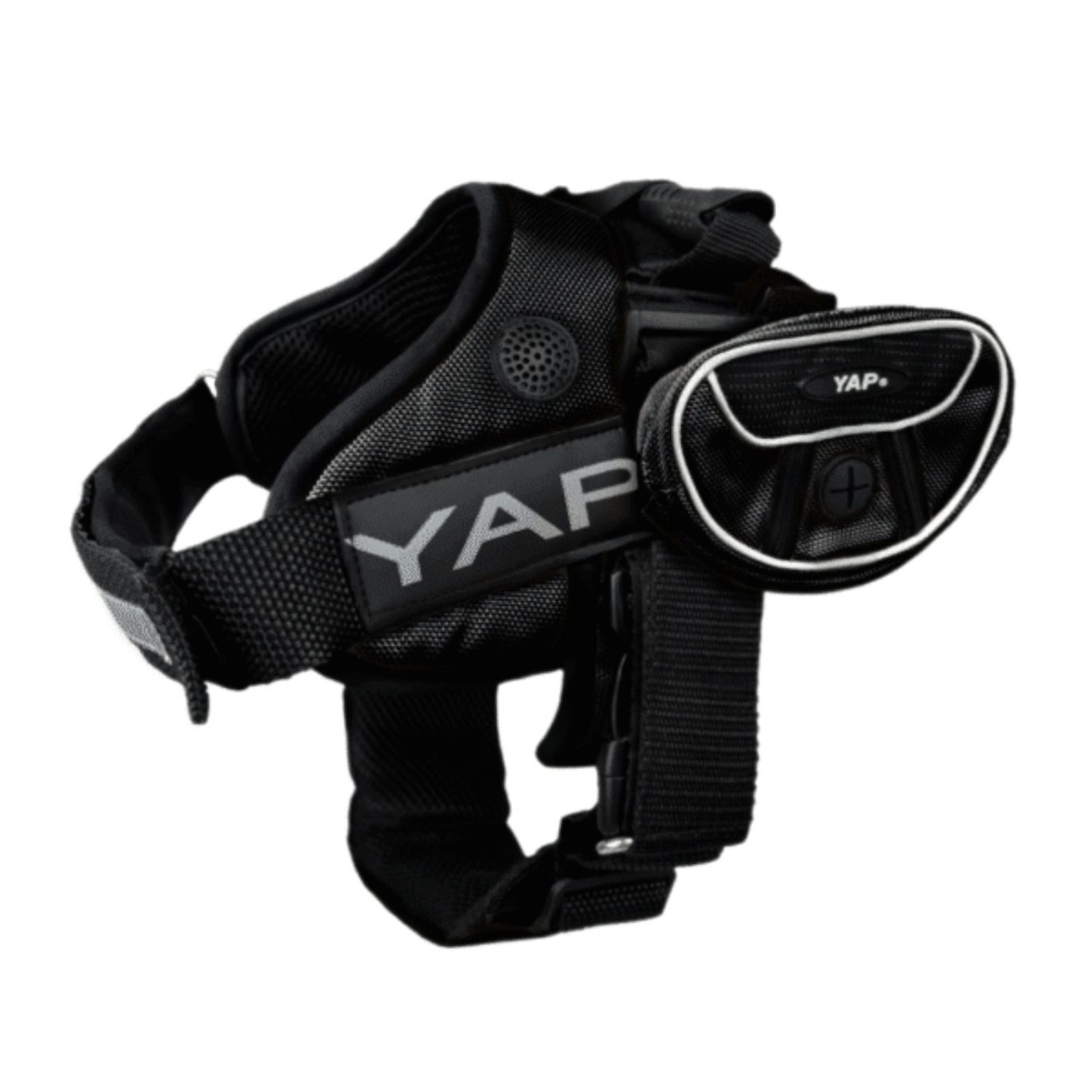
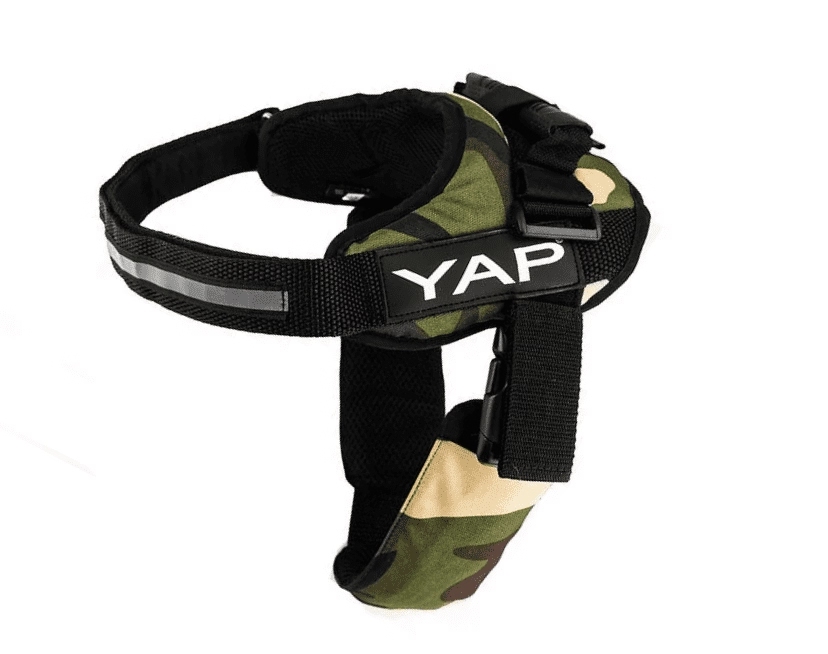
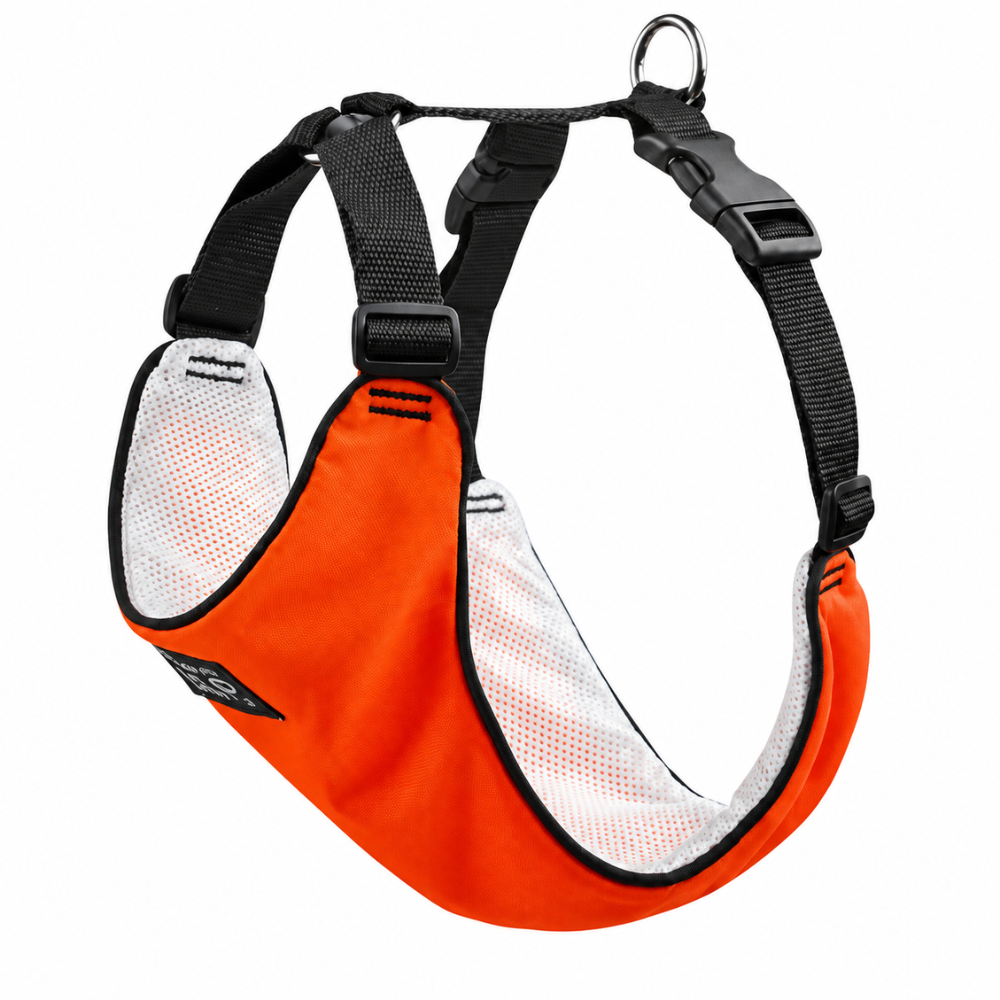
YAP Stores’ Techno Harness achieves this through a four-point adjustment system that distributes contact evenly regardless of the dog’s size or body shape. It fits dogs from 8 to 175 pounds precisely because the geometry of distribution, not just the size of the harness, determines how safely force is managed.
|
Contact Point |
Force Distribution |
Risk Level |
Recommended For |
|
Neck Collar |
Single point at throat |
High |
ID tags only |
|
Back-Clip Harness |
Chest and shoulders |
Low to Medium |
Calm, leash-trained dogs |
|
Front-Clip Harness |
Chest with redirection |
Low |
Dogs that pull |
|
Dual-Clip Harness |
Chest, sternum, shoulders |
Very Low |
Training and active dogs |
|
YAP Techno Harness |
4-point engineered distribution |
Very Low |
All sizes, all activity levels |
How to Find the Best Harness for Dogs That Pull Safely
Many people think a “no-pull” harness is a magic fix. However, many of those designs work by pinching the pet or tightening around their chest. This can cause fear and skin irritation. A better way to stop pulling is through clear communication. An engineered harness provides a stable connection point.

- Negative Feedback: Pinching can cause fear and skin irritation.
- Better Method: Clear communication through a stable connection point.
- Gentle Pressure: When you move the leash, the pet feels firm pressure on their chest.
Our Baby Beta Airflow Tactical Dog Harness is designed for this performance. It is priced at $99.00 and will not stretch or sag. When the gear stays in place, your training is more effective. Using a harness for dogs that pull leads to a more obedient pet without using force. You are building trust with your pet instead of using fear.
2. Neck and Tracheal Protection: What Veterinary Research Confirms
The trachea is a tube made of 35 to 45 C-shaped cartilaginous rings. These rings deliver air to the lungs with every breath. They are not self-repairing structures. Once the cartilage weakens or collapses, the condition is permanent and progressive.
Tracheal collapse is most common in small breeds including Yorkshire Terriers, Pomeranians, Chihuahuas, and Toy Poodles. However, veterinarians at the University of Tennessee have confirmed it in large breeds as well. The condition produces a characteristic honking cough that worsens with excitement, exercise, and any additional pressure to the neck area, including from a collar.
The connection to collar use is direct. Chronic leash pressure applied through a collar compresses the soft tissue surrounding the trachea repeatedly over months and years. A single hard lunge can catch the neck at an angle that creates enough force to herniate a disc, damage surrounding nerves, or worsen existing cartilage weakness.
Veterinarians treating dogs with tracheal collapse universally recommend switching to a harness as part of ongoing management. But the more useful insight is that the switch should happen before the damage occurs. Dog harnesses function as preventative care, not just reactive accommodation.
|
Veterinary Note For dogs diagnosed with tracheal collapse, a harness is not optional. It is standard clinical protocol. The harness distributes pressure across the chest rather than concentrating it on the neck. Even mild collar pressure can trigger severe coughing fits in affected dogs. (Source: Gull Springs Veterinary Specialists) |
Small breed owners using YAP Stores’ Baby Beta AirFlow and Techno Wrap products consistently report the elimination of pulling-related coughing episodes within the first week of switching from a collar. These are not marketing claims. They reflect what the veterinary literature predicts when neck pressure is removed from the equation.
3. Intraocular Pressure: The Hidden Eye Health Risk
This is the point most dog owners have never heard. It is also one of the most well-documented physiological risks associated with neck collar use.
When a collar applies pressure to the ventral neck area, it compresses the jugular veins. Compressed jugular veins obstruct the outflow of aqueous fluid from the eyes. The result is elevated intraocular pressure, or IOP. Elevated IOP is the defining characteristic of glaucoma, a progressive condition that causes permanent vision loss.
A peer-reviewed study published in Veterinary Medicine and Science recruited 24 dogs across brachycephalic and dolichocephalic breeds to measure the effect of collar versus harness use on intraocular pressure. The findings confirmed that collar use produced measurably higher IOP during both stationary and exercise conditions compared to harness use.
For dogs already diagnosed with glaucoma or weak corneas, this risk is particularly serious. But even for healthy dogs, routine collar use creates repeated cycles of elevated ocular pressure that accumulate over time. It is a low-level, chronic stressor to eye tissue that a harness eliminates entirely.
|
Condition |
Risk With Collar Use |
Risk With Harness Use |
|
Tracheal Collapse |
High (especially small breeds) |
Minimal |
|
Elevated Intraocular Pressure |
Documented in clinical research |
Not observed |
|
Cervical Nerve Damage |
Risk with pulling behavior |
Significantly reduced |
|
Musculoskeletal Injury |
Moderate with frequent pulling |
Low with correct harness fit |
|
Glaucoma Exacerbation |
Confirmed in dogs with existing condition |
Not associated |
4. Gait and Biomechanics: How the Right Harness Preserves Natural Movement
Not all dog harnesses protect movement equally. This is where the research gets specific, and where harness design matters significantly.
A landmark 2024 study by Dowdeswell and Churchill published in Reinvention: An International Journal of Undergraduate Research analyzed six different harness types across 30 dogs using high-speed video analysis. The study measured shoulder extension, shoulder flexion, elbow extension, and elbow flexion for each harness type compared to a standard collar.
The findings showed measurable differences between designs. Front-clip harnesses produced the greatest restriction in elbow and shoulder extension. Straight-front harnesses, by contrast, allowed the most natural range of motion across both joints. The researchers concluded that harness design should be matched to the individual dog’s age, breed, body conformation, and predisposition to musculoskeletal issues.
This is why YAP Stores places engineering at the center of its product development process. The Techno Harness uses a Y-front construction that keeps the shoulder joint path clear. The harness contacts the sternum and the sides of the chest without crossing the point of shoulder. This preserves the full arc of the front leg stride, which matters most for active dogs, working dogs, and any breed with known hip or shoulder sensitivity.
|
Research Finding Researchers at Budapest University of Technology and Economics used an 18-camera motion capture system to study five dogs wearing the Julius-K9 Powerharness across different movement conditions. The study established that harness design directly affects how dogs move and that incorrect design choices accumulate biomechanical stress over time. (Source: Julius-K9 / Budapest University) |
Older dogs with arthritis or post-surgical mobility limitations benefit from harnesses with full-body support and ergonomic lift handles. YAP Stores’ harness line includes options designed specifically for this population, allowing owners to assist movement without applying spinal stress to the dog.
5. Behavioral Benefits: Calmer Dogs, Safer Walks
The link between equipment and behavior in dogs is more direct than most owners expect. A dog that is uncomfortable pulls harder. A dog that pulls harder increases neck pressure. Increased neck pressure creates a feedback loop of stress that training cannot easily override when the physical discomfort is still present.
Removing that discomfort changes the walk. Front-clip and no-pull harnesses redirect forward momentum by shifting the dog’s center of gravity sideways when they pull. This makes pulling physically inefficient without creating pain. The dog learns, through mechanics rather than correction, that walking calmly forward is the path of least resistance.
Studies comparing collar and harness use in shelter dogs found meaningful differences in on-leash behavior. Dogs wearing harnesses showed lower rates of stress-related behaviors during walks. Handlers reported greater confidence and control. For reactive or fearful dogs, this matters enormously. A dog that is not fighting neck discomfort has more cognitive bandwidth to respond to redirection cues from its owner.
|
Harness Type |
Best For |
Primary Behavioral Benefit |
YAP Product |
|
Front-Clip |
Pullers, leash reactivity |
Redirects forward momentum |
Beta Noir |
|
No-Pull / Dual-Clip |
Training, transition from collar |
Discourages pulling mechanically |
Techno Harness |
|
Back-Clip |
Calm, trained walkers |
Comfort and freedom of movement |
Performance Wrap |
|
Wrap Style |
Small breeds, anxious dogs |
Body contact reduces anxiety |
Baby Beta AirFlow |
|
Tactical |
Working dogs, K9 operations |
Control and load-bearing stability |
K9i TactiKal |
6. Temperature Regulation: The NASA Outlast Technology Advantage
Most dog harness discussions stop at fit and safety. YAP Stores goes further by addressing a physiological factor that almost no other brand takes seriously: thermal management during wear.

Outlast technology was originally developed for NASA to regulate temperature inside astronaut suits. The material uses phase-change technology, absorbing excess heat when the body produces it and releasing stored heat when the body cools. The result is a material that maintains a stable thermal environment regardless of external temperature swings.
Dogs cannot sweat through their skin the way humans do. They regulate temperature primarily through panting. A harness that traps heat against the chest and shoulder area forces the dog to work harder to maintain a safe core temperature, particularly during warmer months or extended exercise. This is not a comfort issue. In extreme cases, it directly affects the risk of overheating.
The Techno Harness and several other YAP harnesses incorporate Outlast fabric as a standard feature. For dogs in San Francisco’s fog-to-sun climate swings, or anywhere that morning walks are cold and midday walks are warm, this temperature-buffering function delivers measurable physiological benefit that generic harnesses simply cannot provide.
|
YAP Advantage YAP Stores is one of the only pet gear brands in the United States to incorporate NASA-developed Outlast thermal regulation technology into its dog harness line. The same material used in high-altitude mountaineering gear and astronaut equipment now manages heat transfer against your dog’s chest. Visit yapstores.com to see the full technical specifications. |
7. Tactical and Working Dog Safety: The K9i TactiKal Standard
Working dogs face demands that household pets do not. Police K9s, search and rescue teams, and service animals operate in environments where harness failure is not a minor inconvenience. It is a safety risk for both the dog and the handler.
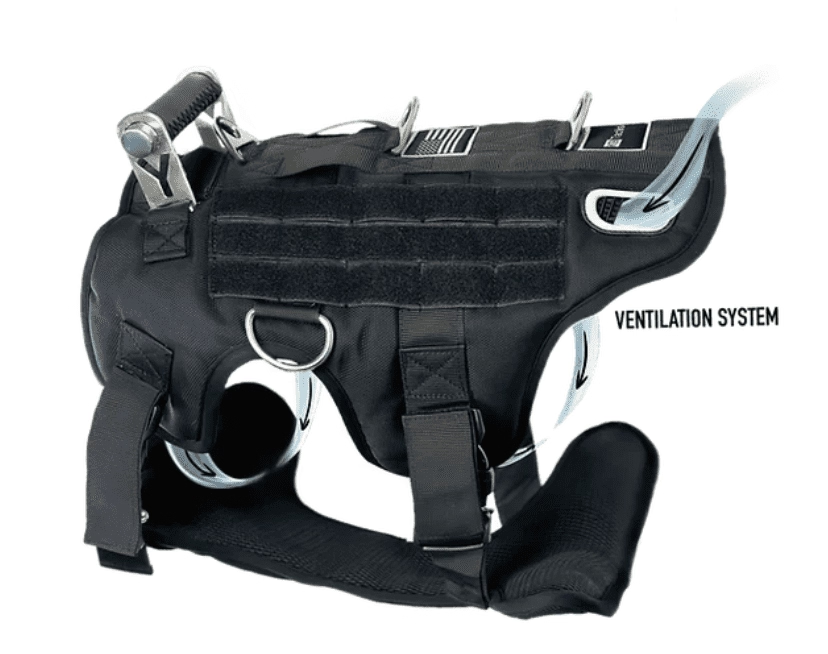
In 2023, YAP Stores began supplying gear to institutional buyers for service and professional working animals. The K9i TactiKal Harness was developed out of that work. It is built to a standard that exceeds typical consumer-grade harnesses in every measurable dimension: load-bearing capacity, attachment point reinforcement, ease of emergency removal, and handler control during high-stress operations.
The principles behind a tactical harness also apply to civilian dogs in high-activity contexts. A dog that hikes rugged terrain, swims, or competes in dog sports places higher mechanical demands on its gear than a dog that walks a city block. The same engineering priorities, secure attachment, controlled contact points, non-restrictive shoulder clearance, and material durability, determine whether the harness protects or stresses the dog across those demands.
|
Feature |
Standard Consumer Harness |
YAP K9i TactiKal Harness |
|
Load-Bearing Capacity |
Varies by brand, often untested |
Rated for working dog applications |
|
Attachment Points |
Single back or chest clip |
Multiple reinforced attachment points |
|
Shoulder Clearance |
Variable by design |
Engineered clear of point of shoulder |
|
Emergency Release |
Standard buckles |
Rapid-release system |
|
Material Grade |
Consumer nylon |
Institutional-grade webbing |
|
Fit Adjustability |
2-3 points |
Multi-point precision fit |
Harness Comparison Table: Which Type Is Right for Your Dog
The best dog harness for your pet depends on three factors: body size, behavior on the leash, and activity level. Use this table as a starting reference, then measure your dog’s chest girth and neck circumference before ordering. YAP Stores provides detailed sizing charts on every product page.
|
Dog Profile |
Recommended Harness Type |
YAP Product |
Key Feature |
|
Small breed, calm walker |
Wrap-style or back-clip |
Techno Wrap or Classic Wrap |
Body contact, gentle support |
|
Small breed, puller |
Front-clip wrap |
Baby Beta AirFlow |
Chest redirection, lightweight |
|
Medium breed, training |
Dual-clip |
Beta Noir Package |
Front and back clip versatility |
|
Large breed, active |
Y-front back-clip |
Techno Harness |
4-point fit, Outlast fabric |
|
Any breed, car travel |
Harness with seatbelt loop |
Universal Seatbelt + Harness |
Crash-rated attachment |
|
Working or service dog |
Tactical |
K9i TactiKal Harness |
Institutional-grade build |
|
Senior dog with arthritis |
Full-support with handle |
Performance Wrap or Tech Coat |
Lift assist, padded contact |
Proper Maintenance: Making Your Harness Last
A harness only protects your dog if it remains in good condition. Proper maintenance extends the life of the product and ensures the structural integrity that safety depends on. Here is what regular care looks like for any quality harness, including all YAP Stores products.
Cleaning
- Machine washable harnesses: Use a cold, gentle cycle inside a mesh laundry bag. Air dry flat. Never tumble dry, as heat degrades stitching and buckle mechanisms.
- Hand wash preferred: For harnesses with Outlast fabric, hand washing in cool water with mild soap preserves the phase-change material’s effectiveness longer.
- Frequency: Wash after heavy use, after wet conditions, or when odor becomes noticeable. Do not let salt, mud, or chlorine dry into the fabric without rinsing.
Essential Accessories for the Ultimate Walk
- Dog Leash : Extended reach for park walks. It allows your pet to explore while you stay in control.
- Short Compression Dog Leash ($59.95): Maximum control for city streets. It keeps your pet close in crowded areas.
- Bundle Benefit: Save 15% when you build a full walking kit. All our hardware is designed to work together.
Inspection Schedule
|
Component |
What to Check |
Frequency |
Replace If |
|
Buckles |
Click security, release smoothness |
Weekly |
Cracked, stiff, or won’t release cleanly |
|
Webbing straps |
Fraying, discoloration, stretch |
Weekly |
Visible fraying or thinning |
|
Stitching |
Thread integrity at stress points |
Monthly |
Any thread separation at load points |
|
Metal hardware |
Rust, corrosion, sharp edges |
Monthly |
Any rust or edge damage |
|
Padding |
Compression, odor, skin contact zones |
Monthly |
Permanently compressed or irritating |
|
Overall fit |
Gap between dog and straps |
Every use |
Dog can slip one shoulder through or out |
YAP Stores offers an exchange policy for sizing issues within 30 days. If your dog grows, loses weight, or you find the fit has changed, the exchange process is straightforward. The investment in a quality harness is only maintained when the fit remains correct.
Engineering Beyond the Minimum Standards
While the USA does not have a federal mandate for pet restraints, organizations like the Center for Pet Safety provide the gold standard for testing and certification. They use rigorous crash-test sleds to determine which dog harnesses truly protect a pet during a high-speed impact. By following these voluntary safety protocols, YAP USA ensures that our gear isn’t just comfortable for a walk in San Francisco, but robust enough to withstand the extreme mechanical forces of a vehicle collision. Using a crash tested dog harness is the most effective way to ensure your pet remains a “passenger” rather than a “projectile” during an emergency stop.
FAQ: What Dog Owners Ask Most
Are dog harnesses better than collars for all dogs?
For daily leash walking, yes. The scientific evidence consistently shows that harnesses reduce neck and tracheal pressure, protect intraocular health, and distribute force more safely than collars. Collars remain appropriate for holding ID tags. For walks, a well-fitted harness is the safer choice for the vast majority of dogs regardless of size or breed.
How do I know if a harness fits correctly?
The two-finger rule applies: you should be able to slide two fingers under any strap, but no more. The harness should not shift when the dog moves. The chest panel should sit flat against the sternum without riding up toward the throat. The shoulder straps should not cross the point of shoulder, which is the bony protrusion at the top of the front leg. YAP Stores provides a detailed measuring guide on each product page.
Can a harness make pulling worse?
Back-clip harnesses can, in some cases, trigger the opposition reflex in strong pullers, which makes them pull harder. Front-clip and no-pull harnesses are specifically designed to prevent this by redirecting forward momentum sideways rather than allowing it to go straight ahead. For dogs with a strong pulling habit, a front-clip or dual-clip design is the correct starting point.
How often should I replace a dog harness?
Inspect the harness weekly for fraying, buckle wear, and stitching integrity at stress points. Most quality harnesses last one to three years with regular cleaning and proper storage. Replace immediately if any component fails the inspection checklist above. A harness with compromised hardware cannot be relied on to hold a dog safely.
What makes YAP Stores harnesses different from other brands?
YAP harnesses are engineered around the center of gravity position for each weight class, which determines where the attachment point sits on the dog’s body. This is a patented approach, not a styling choice. The integration of NASA Outlast thermal regulation fabric, the institutional-grade build of the K9i TactiKal line, and the 20-year history of manufacturing in the United States distinguish YAP from brands that treat harnesses as commodity products.
Is the YAP Techno Harness suitable for brachycephalic breeds?
Yes. Brachycephalic breeds including Bulldogs, Pugs, and French Bulldogs face elevated respiratory risk with collar use because their airway anatomy is already compromised. Moving all leash connection to the chest harness point removes neck pressure entirely. The Techno Harness Y-front design keeps the throat completely clear. For these breeds, a harness is not a preference. It is a medical recommendation.
Final Word
Dog harnesses are not a trend or a marketing category. They are a measurably safer alternative to collar-based walking for the overwhelming majority of dogs. The research is consistent across study after study: collars concentrate dangerous force at the neck, harnesses distribute it safely across the chest and shoulders.
The seven ways covered in this article, pressure distribution, tracheal protection, intraocular pressure reduction, gait preservation, behavioral improvement, thermal regulation, and tactical-grade safety, each represent a separate, documented mechanism through which the right harness protects your dog’s long-term health.
Choosing the best dog harness means matching design to your dog’s size, behavior, and activity demands. It means checking fit regularly and maintaining the gear properly. And it means choosing a product built to an engineering standard, not just sewn together and packaged to look good on a shelf.
YAP Stores has spent nearly two decades building to that standard in San Francisco. Browse the full harness line at yapstores.com, visit the showroom at 900 North Point Street, or reach the team directly at info@yapstores.com or +1 415 346 8878.
Your dog cannot choose their own gear. You can choose it for them. Choose well.
|
Shop the Full YAP Harness Line yapstores.com | info@yapstores.com | +1 415 346 8878 900 North Point Street, Suite E204A, San Francisco, CA 94109 |