Home / Dog Harnesses / Trends In Dog Harness Design Trends In Dog Harness Design: What To Expect In Modern Gear YAP Stores Design Team Canine Gear Engineers October 2026 12 min read Evolution Of Modern Canine Walking Gear Pet gear manufacturing has changed dramatically over recent years as owners demand higher safety standards and superior comfort for their dogs. Traditional nylon straps and basic neck bands no longer satisfy the requirements of attentive pet parents. Examining the current Trends In Dog Harness Design reveals an industry shift toward ergonomic engineering, aerospace fabrics, and heavy duty industrial hardware. Modern walking accessories prioritize the long term health of your companion above simple containment. Innovations in canine anatomy research show that walking equipment must protect vulnerable windpipes and cervical joints. Clinical guidance published by the American Veterinary Medical Association on pet care confirms that redirecting pulling force away from the neck stops acute airway trauma. Today shaping trends in dog harness design focus on wide chest distribution plates that stabilize the skeletal structure during vigorous exercise. Our American made gear accommodates dogs from eight pounds up to one hundred seventy five pounds. Choosing among Best Dog Harnesses ensures your pet benefits from these advanced engineering standards. Manufacturers now combine breathable mesh panels with robust reinforcement seams to handle extreme pulling pressure. Exploring emerging trends in dog harness design helps owners select gear that delivers both uncompromised safety and lasting daily comfort. Vital Industry Fact: Modern manufacturing shifts away from neck choking collars toward anatomically molded chest vests. Tracking trends in dog harness design highlights a commitment to protecting canine skeletal and respiratory health. Trend 1: Choke Free Ergonomics And Low Neck Cuts Protecting sensitive canine airways stands out as the most important development in contemporary pet accessories. Standard collars place direct pressure on tracheal cartilage rings during sudden leash pulls, leading to chronic coughing and respiratory distress. Analyzing trends in dog harness design shows a permanent movement toward scooped necklines that rest safely across the sternum. The Techno harness dog exemplifies this ergonomic movement by keeping the throat completely clear of strap tension. When an active pet surges forward on a walk, the wide breastplate absorbs the force uniformly. Veterinary research from the Cornell University Riney Canine Health Center emphasizes that non restrictive chest gear is essential for preventing long term tracheal collapse. Adopting these low neck contours represents a major milestone in modern pet safety. Smaller breeds and toy varieties gain the greatest relief from these airway protecting shapes. Exploring everyday Harness for small dogs options demonstrates how lightweight engineering shields tiny companions without restricting shoulder movement. These ergonomic breakthroughs ensure every dog breathes freely during outdoor adventures. Trend 2: NASA Outlast Fabric And Thermal Regulation Overheating during warm weather walks creates a serious health risk for heavy coated and working breeds. Traditional padded vests often trap body heat against the chest, causing rapid temperature spikes and exhaustion. Forward thinking designers now integrate aerospace technology into pet gear to solve thermal discomfort. Reviewing modern trends in dog harness design highlights the adoption of active cooling textiles. The Beta Noir classic dog harness integrates authentic NASA certified Outlast fabric technology to regulate skin temperature. This advanced material absorbs excess body warmth when a dog runs hard, stores the thermal energy away from the body, and releases it as temperatures drop. Incorporating aerospace textiles into everyday walking gear represents a massive leap forward for canine comfort. Active thermal balancing prevents dangerous heat exhaustion during demanding summer hikes. Dogs stay cool, dry, and energetic throughout long outdoor excursions. Emphasizing temperature control is one of the most practical trends in dog harness design for pet parents living in warm climates. Trend 3: Modern Structural Features And Hardware Engineering Durability has taken center stage as owners demand gear that withstands rugged outdoor environments. Plastic buckles and thin nylon webbing frequently snap under heavy pulling tension or extreme outdoor temperatures. Observing industrial trends in dog harness design points to a heavy reliance on parachute grade metal hardware and military specification webbing. The Harness with handle category meets this demand by providing robust physical control in high stress situations. The reinforced spine grip allows handlers to lift dogs over trail obstacles, assist senior pets with weak hips, or maintain close control near busy roadways. Load tested metal rings resist bending and corrosion across years of heavy use. Heavy duty construction gives owners total confidence during backcountry adventures. Reinforced box stitching along all high stress points ensures seams remain intact under sudden loads. Strengthening structural hardware is among the most reliable trends in dog harness design for working and sporting breeds. Traditional Gear Versus Modern Design Trends Design Feature Traditional Neck Collar Standard Import Vest YAP Modern Design Gear Airway Pressure Relief Severe Throat Choke Partial Coverage Complete Low Neck Clearance Thermal Heat Regulation None Traps Body Heat NASA Outlast Certified Fabric Hardware Durability Standard Metal Weak Plastic Buckles Parachute Grade Metal Rings Emergency Lift Support None Flimsy Webbing Reinforced Spine Handle Weight Fit Range General Sizing Limited Options 8 to 175 Pounds Coverage American Craftsmanship Imported Imported Handcrafted in the USA Trend 4: Multifunctional Utility And Modular Storage Modern pet accessories increasingly focus on seamless convenience and hands free utility for handlers. Carrying waste bags, training treats, and keys in pockets often creates awkward clothing bulges. Analyzing lifestyle trends in dog harness design highlights the inclusion of integrated storage compartments directly on the vest. The Beta Noir package Dog harness addresses this need by combining performance chest support with a streamlined storage pouch. This pocket holds essential items securely without throwing off the balance of the vest or irritating the dog skin. Handlers enjoy complete freedom of movement while keeping supplies organized. Streamlined profiles prevent brush snags during off road woodland strolls. Practical utility makes daily walking routines smoother and far more enjoyable. Integrating smart storage solutions stands out as one of the most user friendly trends in dog harness design today. Trend 5: Advanced Steering And

Home / Dog Harnesses / Rescue Dog Case Study A Case Study: How a New Harness Transformed a Rescue Dog YAP Stores Rehabilitation Team Canine Safety Specialists October 2026 12 min read The Rescue Dog Walking Dilemma Bringing a shelter dog home brings great joy along with distinct physical challenges. Many newly adopted canines experience deep anxiety when placed on standard walking leashes. In this clinical evaluation, we examine how a new harness transformed a rescue dog that struggled with extreme panic during daily neighborhood outings. Past shelter neglect often leaves dogs reactive to restrictive bands placed directly around their windpipe. Traditional neck collars concentrate pulling force onto the sensitive throat, triggering coughing and heightened fear. Guidelines from the American Veterinary Medical Association on pet health care point out that eliminating cervical neck strain prevents permanent airway damage. This case study demonstrates how a new harness transformed a rescue dog from a frantic puller into a calm trail companion. Our American made gear protects dogs from eight pounds up to one hundred seventy five pounds. Investing in Best Dog Harnesses provides the mechanical security needed to help skittish pets regain confidence. Ergonomic walking vests wrap around the broad chest bone instead of digging into sensitive throat muscles. Observing how a new harness transformed a rescue dog shows that proper equipment creates a secure foundation for behavioral recovery. Clinical Case Finding: Concentrated collar tension keeps rescue dogs in an ongoing state of fight or flight. Documenting how a new harness transformed a rescue dog proves that removing throat pressure restores emotional stability on walks. Case Background: Physical Strain And Leash Fear Our subject was an energetic thirty five pound rescue mix named Buster who arrived with severe leash trauma. His previous owners relied on a basic strap collar that repeatedly choked his airway during sudden lunges. Every outdoor walk produced raspy wheezing, throat irritation, and wild panic reactions whenever cars drove past. Documenting how a new harness transformed a rescue dog began by assessing his physical throat distress. Whenever Buster reached the end of the leash line, the collar snapped against his thyroid gland and cervical spine. Veterinary research from the Cornell University Riney Canine Health Center confirms that neck trauma can provoke chronic airway collapse. Buster began resisting his leash entirely, refusing to step out the front door. It became clear that only an ergonomic walking system could relieve his anxiety. Rescue handlers sought a specialized vest to redirect kinetic walking force away from Buster fragile throat cartilage. Handlers needed an escape proof design that would keep him from slipping backward out of his gear during traffic scares. Testing how a new harness transformed a rescue dog required replacing restrictive collars with an American made chest vest. The Intervention: Selecting Body Specific Walking Gear Rehabilitation began by introducing Buster to the Techno harness dog for morning walks. This model features a low scooped neckline that rests directly on the breastbone. The deep contour eliminates upward choking pressure when an anxious dog surges ahead unexpectedly. Witnessing how a new harness transformed a rescue dog proved that throat comfort directly improves emotional focus. For high distraction environments near downtown streets, trainers utilized No-pull dog harnesses that steer the torso naturally. Connecting the leash line to the front chest plate redirects pulling force sideways, breaking forward drive without pain. The dog learns to yield to leash pressure through gentle mechanical redirection rather than harsh neck corrections. Evaluating how a new harness transformed a rescue dog revealed that steering leverage prevented panicked lunging fits. For training sessions with smaller rescue pups in the facility, staff employed the Baby Beta dog harness. Its lightweight construction and airflow mesh provided gentle support without overwhelming timid dogs. The soft edge binding protected delicate skin from friction burns behind the front elbows. Observing how a new harness transformed a rescue dog confirmed that breed specific tailoring speeds up physical healing. Low neckline opening leaves the front windpipe completely free of pressure Dual adjustment slides ensure an escape proof fit around the rib cage Soft interior lining stops abrasive fur rubbing behind the front armpits High tensile metal hardware resists bending under sharp pulling tension Thermal Regulation And Outdoor Stress Reduction Stress causes anxious shelter dogs to pant heavily and overheat quickly during outdoor walks. Buster thick coat trapped body heat against his chest, causing physical exhaustion on warm summer afternoons. Handlers switched his gear to the Beta Noir classic dog harness to combat this heat stress. This specialized vest integrates authentic NASA certified Outlast fabric technology. The Outlast fabric actively absorbs excess body heat when physical exertion spikes. The material stores this thermal energy and releases it only as the dog skin cools down. This ongoing thermal regulation prevented dangerous spikes in Buster core body temperature. Demonstrating how a new harness transformed a rescue dog highlighted the vital role that cooling fabrics play in reducing walk anxiety. For longer weekend trail hikes, handlers relied on the Beta Noir package Dog harness with built in storage utility. The integrated pouch held waste bags, calming treats, and emergency contact details securely on the vest. The balanced pouch prevented the vest from shifting sideways during rapid movement. The daily reality of how a new harness transformed a rescue dog showed that functional convenience benefits both pet and handler. Traditional Collar Versus YAP Rehabilitation Harness Evaluation Parameter Traditional Neck Collar Standard Import Harness YAP Rescue Series Harness Tracheal Pressure Relief None Direct Choke Partial Relief Complete Low Neck Clearance NASA Outlast Cooling Fabric No No Yes Certified Technology Emergency Top Control Handle None Flimsy Nylon Parachute Metal Load Tested Sizing Weight Range Variable Limited Sizes 8 to 175 Pounds Fit Escape Proof Multi Point Lock Easy Neck Slip Moderate Contoured Anatomical Lock American Made Craftsmanship Imported Imported Handcrafted in the USA Measured Behavioral And Physical Results Within three weeks of consistent walking in ergonomic chest gear, Buster showed dramatic behavioral improvements. The persistent wheezing and coughing stopped completely once pressure was

Home / Dog Harnesses / Top 5 Harnesses for Active Dogs Explore our Top 5 harnesses for active dogs YAP Stores Outdoor Team Canine Gear Specialists October 2026 12 min read Demands On Outdoor Canine Gear Exploring rugged terrain with energetic canine companions requires reliable walking equipment that handles severe physical strain. Standard walking gear stretches quickly when large breeds sprint after wildlife or navigate steep trail inclines. High performance harnesses for active dogs keep pets secure across diverse outdoor environments. Standard neck collars place unsafe pressure across the windpipe during energetic runs, making supportive chest plates essential for outdoor safety. Every active canine needs walking equipment tailored to their distinct body structure and speed. Clinical guidelines published by the American Veterinary Medical Association on pet care explain that transferring mechanical force away from the neck protects dogs from cervical trauma. Premium harnesses for active dogs distribute kinetic pulling pressure evenly across the sternum and rib cage. This balanced distribution stops choking and allows full shoulder mobility during intense exercise. Investing in Best Dog Harnesses provides the physical durability required for backcountry trails and daily jogs. Handcrafted American gear accommodates dogs from eight pounds up to one hundred seventy five pounds. This wide sizing range gives compact trail buddies and massive working dogs identical structural security. Premium harnesses for active dogs combine reinforced webbing with anatomical contouring to make every excursion safe. Vital Trail Fact: Traditional neck collars concentrate pulling energy onto fragile airway tissues. Choosing dedicated harnesses for active dogs shifts tension across the broad rib cage to keep breathing clear during demanding runs. Essential Features In Outdoor Walking Gear High energy dogs place intense mechanical stress on their walking gear through rapid accelerations, abrupt stops, and sudden direction changes. Flimsy retail vests fail when hardware components break under load. Top tier harnesses for active dogs feature load tested metal rings, industrial stitching, and puncture resistant outer shells. Quality construction prevents catastrophic gear failures on remote paths far from trailheads. Heat regulation represents another critical factor for running companions on warm afternoons. Demanding physical workouts drive canine body temperatures up rapidly. Advanced harnesses for active dogs incorporate technical textiles that absorb surplus skin warmth. These fabrics release stored heat once the animal rests in the shade, helping prevent overheating. Escape proof tailoring keeps anxious or excitable pets secure around unexpected wilderness encounters. Contoured undercarriages prevent dogs from backing out of their gear when startled by loud trail sounds. Choosing ergonomic harnesses for active dogs ensures your companion stays properly attached through sudden stops, sharp river crossings, and rough terrain. Top 5 Harness Selections For Outdoor Adventures 1. Techno Harness: Ultimate Choke Free Throat Protection The Techno harness dog leads our outdoor recommendations for pets with sensitive airways. Its deeply scooped neckline sits well below the windpipe, resting safely on the sternum. When energetic pets surge forward on the trail, the front breastplate absorbs the force without pressing against airway cartilage. Trail enthusiasts seeking reliable harnesses for active dogs depend on this low neck profile to keep breathing steady. Constructed with durable American webbing, this model holds up through thick brush and muddy paths. Soft edge binding stops abrasive rubbing behind the front armpits during high speed sprints. Among top tier harnesses for active dogs, this design provides unmatched respiratory security for small to medium running breeds. 2. K9I Tactikal Harness: Rugged Control With Integrated Handle Large working breeds require exceptional mechanical strength when traversing demanding backcountry routes. The Tactical Dog Harness features load tested parachute metal hardware and military grade webbing for heavy pullers. The built in top spine handle gives handlers immediate lifting leverage over boulders, steep stairs, and high riverbanks. Experienced trainers rely on these rugged harnesses for active dogs to maintain command over powerful pets. Veterinary guidance from the Cornell University Riney Canine Health Center emphasizes that sturdy chest vests offer superior physical support during athletic activities. The reinforced undercarriage handles full body weight without compressing the abdomen. This heavy duty construction makes it a standout choice among harnesses for active dogs tackling challenging trails. 3. Baby Beta: Lightweight Breathable Agility Agile dogs require lightweight gear that eliminates excess bulk while maintaining high structural strength. The Baby Beta dog harness provides a streamlined profile for fast pace running. Its ventilated layout promotes constant airflow across the chest, helping prevent trapped heat and moisture. Runners select these minimalist harnesses for active dogs to give their pets unrestricted shoulder extension. Smooth lining fabrics protect fine coats from matting and friction breaks. The secure clip system ensures quick fitting before early morning road jogs. Among streamlined harnesses for active dogs, this vest delivers exceptional freedom of movement across long distances. 4. Beta Noir Classic: NASA Outlast Temperature Regulation Managing heat buildup is crucial when jogging through exposed terrain under direct summer sunlight. The Beta Noir classic dog harness integrates authentic NASA certified Outlast fabric technology. This advanced textile absorbs excess body heat as physical exertion peaks, releasing that warmth only as your dog rests. Pet parents choose these advanced harnesses for active dogs to keep skin temperature steady on sunny treks. The dark fabric resists visible trail grime while offering high tear resistance against rough brush. Reinforced stitching across every stress point prevents seams from splitting under tension. This thermal regulating capability establishes it as one of the most innovative harnesses for active dogs available today. 5. Beta Noir Package: Utility Storage For Backcountry Excursions Carrying essential accessories on extended outdoor adventures can quickly clutter a handler hands. The Beta Noir package Dog harness solves this problem by pairing performance support with a streamlined storage pocket. Handlers can stow waste bags, emergency contact cards, or training treats directly on the dog vest. Adventurers who demand utility favor these multi functional harnesses for active dogs. The integrated pouch sits balanced on the spine without shifting sideways during fast movements. Heavy duty American webbing keeps the entire system securely centered throughout long trail outings. Selecting these versatile harnesses for active

Home / Dog Harnesses / Benefits Of Using A Harness 7 Benefits Of Using A Harness Over A Traditional Collar YAP Stores Research Team Canine Safety Specialists October 2026 12 min read Understanding The Health Advantages For Daily Walks Walking your dog is an important daily routine that keeps pets mentally active and physically fit. Many pet parents continue to snap a leash onto a traditional neck collar without realizing the physical stress it creates. The primary benefits of using a harness involve protecting delicate skeletal structures during everyday excursions. Neck collars concentrate pulling forces onto a small surface area, which can damage soft tissues quickly. A well built harness wraps around the body to distribute pressure across the wide rib cage and sternum. The American Veterinary Medical Association canine guidelines emphasize that redirecting force away from the neck stops acute throat trauma. The physical benefits of using a harness include preserving breathing freedom on morning walks. Our American made gear accommodates dogs from eight pounds up to one hundred seventy five pounds[cite: 1]. This wide range gives puppies and massive breeds equal protection on outdoor trails[cite: 1]. Choosing an Easy to lift dog harness provides reliable stability when guiding your companion across uneven ground or busy streets. Traditional neck bands fail to offer this total body support. Switching to dedicated chest gear prevents chronic physical injury and creates a calm walking experience for both dog and handler. Experienced trainers often highlight the lasting benefits of using a harness for establishing safe leash manners. Vital Safety Fact: A dog neck contains critical blood vessels, thyroid glands, and cartilage rings. Exploring the benefits of using a harness proves that shifting tension to the sturdy rib cage prevents irreversible throat injuries. Benefit 1: Eliminating Severe Neck Strain And Tracheal Damage Sudden lunges at neighborhood squirrels put massive strain on canine throat tissues. When a dog pulls against a standard collar, the force hits the windpipe directly. This impact causes airway constriction, coughing fits, and painful throat soreness. Realizing the protective benefits of using a harness allows dog owners to avoid irreversible airway injury. Toy dogs and brachycephalic breeds suffer the fastest damage under concentrated neck collar pressure. Investing in a specialized Choke free dog harness removes all upward tension from vulnerable airway cartilage[cite: 1]. The low neck profile keeps the throat completely open during swift stops[cite: 1]. Research published by the Cornell University Riney Canine Health Center confirms that removing collar pressure protects dogs prone to respiratory issues. The front breastplate transfers movement to the broad chest bone so your pet breathes freely without irritation. These clear airway protections represent the greatest benefits of using a harness for companion pets. Cervical vertebrae also take punishment when a dog hits the end of a leash. Jerking motions create spinal alignment problems and pinched nerves over time. A supportive chest system stabilizes the spine during high excitement walks. You quickly see the benefits of using a harness whenever an excitable puppy darts forward unexpectedly. Your canine companion enjoys safe outdoor exercise without experiencing painful neck trauma. Benefit 2: Gaining Superior Leash Control For Strong Pullers Strong dogs can pull owners off balance if their gear lacks proper leverage. Neck collars provide minimal control when a large dog lunges forward with full body weight. The handler ends up in a tugging match that reinforces unwanted pulling behaviors. Handlers discover the practical benefits of using a harness the moment they guide a powerful pet past outdoor distractions. Harness systems give you mechanical leverage by securing the dog center of gravity. Our collection of No-pull dog harnesses redirects forward momentum sideways across the body without causing pain. When your dog lunges ahead, the chest plate guides the torso back toward you naturally. This gentle redirection breaks pulling momentum without jerking the neck. One of the main benefits of using a harness is transforming frantic walks into cooperative outings. Walking sessions become peaceful exercises rather than stressful physical struggles. Proper leverage also keeps handlers safe on wet grass and icy sidewalks. You maintain firm balance because you control the strongest part of the dog body. The dog learns to walk on a relaxed leash without aggressive corrections. This clear communication builds mutual trust throughout every neighborhood route. Experiencing these control advantages proves the true benefits of using a harness for daily family walks. Redirects forward pulling power across the sturdy rib cage Eliminates painful collar choke during abrupt lunges[cite: 1] Provides superior balance and stability for handlers on slick paths Encourages natural loose leash walking manners without intimidation Benefit 3: NASA Outlast Cooling And Thermal Regulation Overheating represents a serious danger for active dogs during summer outings. Thick chest padding traps body warmth and drives up skin temperatures quickly. Trapped chest heat leads to exhaustion, panting, and heat related health crises. Understanding the seasonal benefits of using a harness equipped with active thermal technology helps keep dogs safe in warm weather. Standard walking vests often lack the ventilation needed to keep working dogs comfortable. Our exclusive Outlast cooling dog harness integrates authentic NASA certified fabric technology[cite: 1]. This advanced textile absorbs excess body heat when your dog runs hard[cite: 1]. It stores the warmth away from the skin and releases it only when temperatures drop[cite: 1]. This active thermal balancing prevents dangerous spikes in core body heat during hot afternoon runs[cite: 1]. Pet owners value the thermal benefits of using a harness engineered with aerospace grade materials[cite: 1]. Pairing thermal materials with an Airflow dog harness structure maximizes fresh air circulation across the coat. Breathable mesh panels allow heat to escape instead of trapping sweat and moisture against delicate fur. Your companion stays pleasantly cool and energetic even during demanding summer hikes. Enjoying active summer trails without heat fatigue illustrates the cooling benefits of using a harness on outdoor trails. Harness Versus Traditional Collar Comparison Safety Feature and Capability Traditional Collar Basic Pet Harness YAP Certified Harness Airway and Windpipe Protection Zero Protection Partial Complete Low Neck

Home / Dog Harnesses / Dog Harness For Your Breed How To Choose The Right Dog Harness For Your Breed YAP Stores Research Team Canine Gear Specialists October 2026 12 min read Selecting the correct dog harness for your breed requires understanding canine anatomy and physical strength. Every dog has unique body proportions that standard collars fail to accommodate. Neck collars place severe stress on the sensitive windpipe during daily neighborhood walks. A choke free dog harness distributes walking forces safely across the broad chest bone instead. Toy breeds and short nosed dogs require special throat clearance to prevent breathing troubles. Deep chested hounds and working dogs need sturdy chest plates that will not slip sideways during exercise. According to clinical guidelines from the American Veterinary Medical Association on pet health care, reducing cervical neck strain protects your dog from permanent airway damage. Our American made gear protects dogs from eight pounds up to one hundred seventy five pounds. Investing in the Best Dog Harness provides both durable control and total body comfort on every excursion. A harness tailored to your dog body structure stops throat choking completely. It also prevents friction rubs behind front legs during energetic neighborhood walks. You keep your companion secure while safeguarding their long term health. Vital Safety Fact: Traditional neck collars concentrate pulling force directly onto fragile cartilage rings. A proper dog harness for your breed directs pressure away from the neck. It secures your pet safely across the sternum and ribs. Anatomy Differences Across Dog Breeds Dog breeds come in an impressive range of body structures and muscle builds. A small Chihuahua features delicate neck bones that cannot take sharp pulls. In contrast, an English Bulldog has a wide barrel chest and thick neck. Choosing a generic harness without checking chest depth leads to poor fit and escaping pets. Sighthounds like Greyhounds and Whippets have narrow waists combined with deep rib cages. Standard walking gear slips right off their slender frames when they pull backward. Long bodied breeds like Dachshunds face spinal stress if a harness pulls downward improperly. You must match harness shape directly to your dog body structure. The correct harness design rests securely against the sturdy breastbone. It stays well clear of the soft underarm area to stop chafing. Proper strap positioning gives your dog free shoulder motion without restrictive rubbing. This anatomical alignment keeps your pet active and happy on every walk. Protecting Dogs With Sensitive Airways Airway vulnerability affects many beloved companion breeds today. Toy Poodles, Yorkshire Terriers, Pugs, and French Bulldogs often suffer from fragile airway structures. Pulling against a standard neck collar causes coughing fits and sudden respiratory distress. These dogs require specialized low cut chest designs that keep the throat open. Owners of fragile pups need a dependable Harness for Collapsing Trachea that completely clears the windpipe. Our low neck cut design places all tension squarely across the center of the chest. This smart engineering eliminates upward throat pressure during unexpected lunges. You can explore our full collection of Dog Harness for Collapsing windpipe conditions to find the exact match for your small pet. Veterinary research published by the Cornell University Riney Canine Health Center emphasizes that non restrictive walking gear is essential for dogs prone to airway collapse. Eliminating neck pressure stops airway irritation before it turns into chronic coughing. Your small pup stays calm and breathes naturally throughout outdoor activities. Low neckline opening leaves the front throat unobstructed Even pressure distribution across the sternum protects the windpipe Smooth interior fabric stops friction on delicate puppy skin Secure buckle closures prevent accidental slips during sudden moves Managing Heat and Temperature For Heavy Breeds Overheating is a serious hazard for large working dogs and flat faced breeds. Boxers, Bulldogs, and heavy coated German Shepherds struggle to cool down in hot summer weather. Thick padded harnesses trap body warmth against the chest and raise core temperature quickly. This trapped heat leads to exhaustion during simple afternoon strolls. Selecting a specialized Harness for hot weather Collapsing Trachea solves both breathing issues and thermal strain at the same time. YAP harnesses incorporate genuine NASA certified Outlast fabric. This advanced thermal material actively absorbs excess body heat and releases it when the dog cools down. It keeps skin temperature steady and pleasant throughout warm outings. Large active breeds also generate immense pulling power on leash. The K9I Tactikal Harness features load tested parachute metal hardware and military grade webbing for heavy pullers. It handles substantial pulling tension without stretching or snapping. This heavy duty build gives you complete control while protecting your powerful pet. Breed Restraint and Harness Feature Comparison Feature and Specification Standard Collar Basic Pet Harness YAP Certified Harness Windpipe and Throat Protection None Partial Complete Low Neck Clearance NASA Certified Outlast Fabric No No Yes Built In Load Tested Metal Hardware Standard Plastic Only Yes High Tensile Weight Range Fit Options Variable Limited Sizes 8 to 175 Pounds Made in USA Craftsmanship Rare Imported Yes American Made Exchange Policy Protection Varies Strict 30 Day Easy Exchange How To Measure Your Breed For An Accurate Fit Accurate measurements guarantee that your dog harness for your breed functions properly. Never guess your dog harness size based on weight estimates alone. Two dogs weighing thirty pounds often have completely different rib profiles. A flexible fabric tape measure provides the exact numbers required for a snug fit. Start by wrapping the tape around the widest part of your dog rib cage. This spot sits right behind the front legs on almost all breeds. Keep the measuring tape level and snug against the fur without pulling tight. Note this chest girth measurement in inches to compare against our sizing charts. Next check the neck base where the top of the harness rests. This measurement sits lower than a traditional collar placement. After adjusting the straps on your pet, test the fit using the standard two finger method. You should easily slide two fingers under every strap with light resistance. This

Home / Harnesses / Crash Tested Car Harness Crash Tested Dog Car Harness | Safety Certified | YAP Stores Y YAP Stores Editorial Vehicle Safety Engineers 2026 11 min read Why Your Dog Needs a Crash Tested Car Harness Car travel with dogs demands equipment that protects in sudden stops and accidents. A crash tested dog car harness is not optional. It is essential safety gear that keeps your dog secure during every drive. Unrestrained dogs become projectiles in accidents, facing injuries that proper harnesses prevent. According to the National Highway Traffic Safety Administration guidelines for passenger safety, proper restraint systems protect all occupants during vehicle travel. A dog car harness designed for vehicle attachment must withstand crash forces, not just comfort your dog on regular drives. Testing under load conditions determines whether a harness actually protects or merely attaches. This distinction matters more in accidents than in everyday driving. Your dog depends on engineering that meets real-world impact demands. Critical Point: A crash tested dog car harness prevents injuries from sudden deceleration and impact forces. Without proper restraint, even a moderate collision can cause severe injury to your unprotected dog. Engineered harnesses distribute crash forces safely, keeping your dog secure in the back seat throughout unexpected situations. What Crash Testing Actually Means Crash testing evaluates whether equipment survives impact forces without failing. A crash tested dog harness undergoes testing under controlled collision scenarios. The harness must remain secure, preventing the dog from shifting or escaping. Attachment points must hold under sudden force. Straps must distribute load without breaking or tearing. Engineers follow impact testing protocols, similar to those described by ASTM international standards for vehicle safety testing, to validate equipment performance. Not all harnesses undergo crash testing. Standard pet harnesses attach your dog to a leash for walks, not crash scenarios. They lack the reinforcement needed to withstand impact forces. A harness advertised as car safe without crash testing provides false confidence. Genuine crash testing means engineers subjected the harness to real impact scenarios and validated performance data. Load Testing and Impact Scenarios Hardware tested under load means every connection point received force testing. Buckles were evaluated at breaking points. Straps were tested for tearing resistance. When a manufacturer states crash testing, they document how much force the harness withstood without failure. This data matters. It proves the harness will protect your dog when real accidents happen. Universal Seat Belt Attachment A tested dog car harness compatible with standard vehicle seat belts keeps your dog secure without special installation. Most cars have universal seat belt systems. A harness with a D ring attachment point threads the seat belt through harness loops or connects via carabiner clip to the back strap webbing. This simple attachment provides crash-tested security. Never attach the seat belt to the leash ring. The leash ring is not designed to withstand crash forces. Only attachment points specifically engineered for crash scenarios should receive seat belt connections. This distinction prevents harness failure during the exact moment when protection matters most. Place your dog in the back seat for safety Thread seat belt through harness D ring attachment Use carabiner clip for additional security Ensure seat belt is fully buckled and tight Give a firm tug to confirm connection security Allow enough freedom for comfortable positioning Never attach to leash ring or non-structural points Fitting Your Dog Safely in the Car Proper fit determines crash protection effectiveness. Your dog should sit, stand, or lie down comfortably without sliding or shifting. The harness must stay centered on the body. Straps should be snug enough to prevent slipping but loose enough to allow natural breathing. A two-finger rule applies after fitting. Slide two fingers under any strap with firm resistance. Back seat positioning protects your dog and the driver. Never place an unrestrained dog in the front seat. Airbag deployment can severely injure a small dog. The back seat provides distance from the dashboard and windshield. A crash tested car harness keeps your dog restrained in the back seat throughout sudden stops or accidents. Size Selection for Accurate Fit Measure your dog’s chest girth at the widest point behind the front legs. This measurement guides size selection more reliably than breed assumptions. The harness must fit your specific dog, not just any dog in their weight range. Proper sizing ensures crash force distribution works as engineered. An oversized harness allows too much movement. An undersized harness restricts breathing. Car Restraint Options Comparison Restraint Type Unrestrained Basic Harness Crash Tested Harness Crash Protection None Unproven Load tested Seat Belt Compatible Not applicable Variable Universal fit Tested for Impact No No Yes, documented Hardware Strength None Standard Reinforced Back Seat Safety Not safe Limited Full protection Legal Compliance Often illegal Questionable Safety standard Injury Risk Severe Moderate Minimal Distraction Prevention No Limited Complete restraint Materials That Withstand Impact Crash tested harnesses use reinforced materials capable of handling sudden forces. Standard fabric fails under impact stress. Engineered webbing distributes load without tearing. Buckles are made from materials that bend but do not break. Stitching is reinforced at all stress points. NASA certified Outlast fabric provides thermal regulation while maintaining structural integrity during repeated use and emergency situations. Made in the USA construction with load-tested hardware means your dog’s safety equipment meets rigorous engineering standards. Reinforced stitching at every connection point ensures the harness survives years of daily use plus unexpected impact scenarios. This quality difference between basic pet harnesses and crash tested designs determines protection levels when real accidents happen. Comfort During Long Drives Your dog travels more comfortably when the harness does not create heat stress. NASA Outlast fabric stores and releases heat precisely, keeping your dog comfortable whether driving on hot summer days or cold winter mornings. Temperature stability reduces stress during travel, keeping your dog calmer and more secure in the vehicle. A comfortable dog remains properly positioned, maintaining crash protection throughout the journey. Maintaining Your Crash Tested Harness Regular inspection ensures your harness remains safe for crash scenarios.

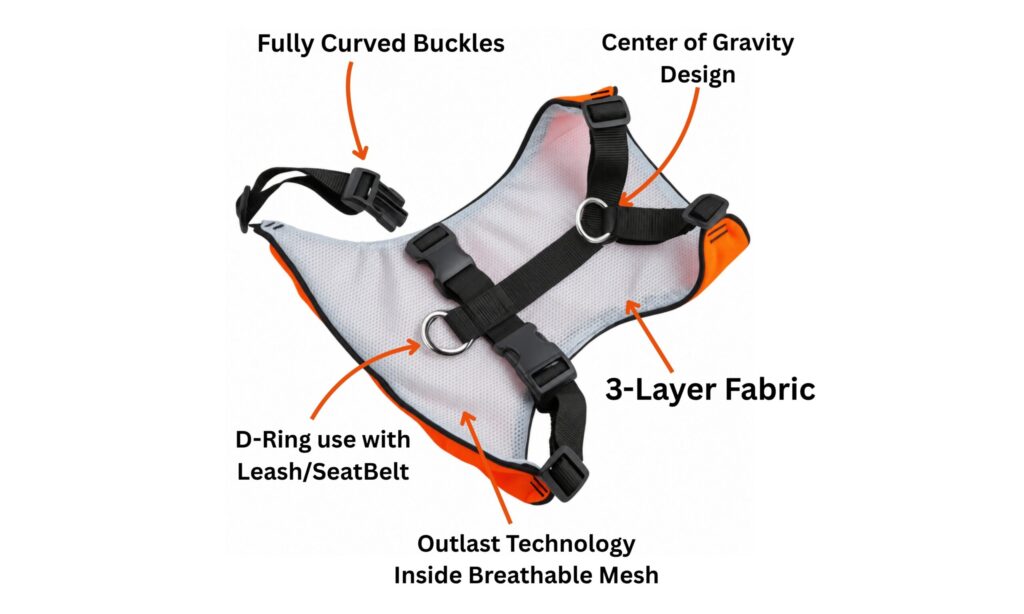
Home / Harnesses / Service Dog Harness Service Dog Harness with Handle | Emergency Ready | YAP Stores Y YAP Stores Editorial Service Dog Equipment Engineers 2026 10 min read Why Service Dogs Need Engineered Harness Design Service dogs work all day. They guide their handlers through crowded spaces, navigate stairs and curbs, and respond to medical alerts during critical moments. Their harness must do far more than attach a leash. It must distribute weight evenly, protect vital organs, provide emergency lift capability, and stay comfortable during eight or more hours of daily use. A quality service dog harness becomes an extension of your dog’s working equipment. The difference between basic harnesses and engineered designs determines whether your service dog stays comfortable and protected or develops strain injuries from repetitive pulling and pressure concentration. This matters more for working dogs than for any other role. According to the American Kennel Club guidelines for service dogs, proper equipment selection is critical for handler safety and dog wellbeing. Key Point: Service dogs working in public spaces face different demands than pets at home. Your harness must provide emergency lift capability, distribute load evenly across the frame, regulate temperature during indoor and outdoor transitions, and remain comfortable throughout extended working periods. Engineered harnesses meet these demands. Basic designs create unnecessary strain. Why an Emergency Handle Matters Most The emergency handle is where service dog harnesses differ fundamentally from basic pet designs. A built-in handle lets you lift your service dog safely without applying any pressure to the neck or throat. In crowded public spaces, stairwell transitions, or unexpected medical situations, this capability becomes essential. You need to guide your dog quickly without choking or throat strain. A dog harness with a handle allows quick directional adjustments when your dog startles or encounters unexpected triggers. The handle construction must be reinforced to safely support your dog’s full weight. This is not an afterthought feature. It is core engineering that separates working harnesses from casual pet equipment. Service dogs also need harnesses that protect against specific health vulnerabilities. Collapsing trachea is a serious concern in many service dog breeds, as detailed by veterinary professionals at the Veterinary Partner for tracheal collapse information. A harness for collapsing trachea distributes load away from the throat, protecting the airway and allowing full breathing capacity during working hours. This becomes critical for dogs working in high-stress or high-activity environments. How Engineered Harnesses Protect Your Service Dog The fundamental principle behind service dog harness engineering is pressure distribution. When your dog pulls or you need to guide them, force must spread across the chest and shoulders, the strongest parts of the frame. Load concentration on the throat creates long-term damage to the trachea, thyroid, and major blood vessels. Over months of working, this repeated strain causes lasting injury. Engineered harnesses use curved buckles that sit flat against the body, preventing rubbing and irritation during all-day wear. The straps themselves must flex with your dog’s movement rather than creating rigid pressure points. NASA certified Outlast fabric provides thermal regulation, keeping your service dog comfortable as they transition between indoor air conditioning and outdoor weather. Temperature stability reduces stress and keeps your dog focused on their job. Material Quality for Durability Service dogs work daily. The harness must withstand years of intense use without degrading. YAP harnesses use reinforced stitching and hardware tested under load. Every connection point and strap receives professional construction. This durability means your service dog’s equipment remains reliable through years of professional work. Sizing Your Service Dog Harness Correctly Service dogs range from small assistance animals to large mobility support dogs. Proper sizing means your harness works with your dog’s frame rather than against it. Measure your dog’s chest girth at the widest point behind the front legs. This measurement guides size selection more reliably than breed assumptions. A harness with a handle must fit snugly enough to stay centred during movement but loose enough to allow comfortable breathing. The two-finger rule applies after fitting. Slide two fingers under any strap with firm resistance. Curved buckles should sit flat against the body without pressing into skin. For service dogs, this fit precision prevents the irritation that could affect their focus or comfort during working hours. Measure chest girth at the widest point behind front legs Use a soft flexible tape measure for accurate measurement Prioritize girth measurement over neck measurement Apply two-finger rule to all adjustment straps Ensure curved buckles sit flat without skin pressure Test that you cannot pull harness over the head Confirm emergency handle positioning for quick access Service Dogs Working in Hot Weather Many service dogs work in warm climates or spend hours in outdoor environments. Heat stress compounds the physical demands of working hours. A harness for hot weather collapsing trachea addresses both thermal regulation and breathing protection. NASA Outlast fabric stores and releases heat precisely, keeping your dog comfortable regardless of season or environment. Overheating compromises service dog performance and creates health risks. Thermal regulation prevents the body temperature spikes that affect focus and physical capability. For service dogs working multiple hours daily, this thermal stability becomes as important as load distribution or emergency handle capability. Service Dog Harness Features Comparison Feature Basic Pet Harness Working Dog Harness Service Dog Harness Emergency Handle Not included Optional Reinforced standard Trachea Protection Basic design Moderate protection Engineered protection Thermal Regulation Standard fabric Improved fabric NASA Outlast tech All-Day Comfort Limited hours Extended hours Full 8+ hours Pressure Distribution Concentrated Spread design Engineered geometry Load Capacity Limited range Wide range 8 to 175 lbs Durability Testing Standard Heavy-duty Professional load testing Made in USA Variable Often imported Reinforced stitching Getting Your Service Dog Comfortable with Harness Work Service dogs must acclimate to harness wear during their training phases. Start with short sessions and gradually extend duration as your dog adjusts to the equipment. Let your dog sniff and inspect the harness before first fitting. Positive associations with putting on and wearing the harness make

Home / Dog Harnesses / Dog Harness for Collapsing Trachea Best Dog Harness for Collapsing Trachea: 2026 Guide YAP USA Editorial Pet Gear Specialists October 2026 9 min read Chest routing keeps leash pressure away from a sensitive airway during everyday walks. A dog harness for collapsing trachea is not a medical treatment, but the right one removes a source of daily pressure that can make an already sensitive airway work harder. This guide explains what tracheal collapse is in general terms, why harness choice matters alongside veterinary care, and which design features actually help avoid extra strain on the neck. Please note: This guide is for general information only and is not a substitute for veterinary advice. If your dog has been diagnosed with tracheal collapse or shows a persistent honking cough, see a veterinarian for proper diagnosis and treatment. Key Takeaways A dog harness for collapsing trachea routes leash pressure to the chest instead of the neck, where the trachea sits close to the surface. Tracheal collapse is most common in toy and small breeds, though it can occur in dogs of any size. A harness does not treat or prevent tracheal collapse on its own and never replaces veterinary diagnosis and care. The Techno Harness uses choke free chest routing and fits dogs from 8 to 175 lbs. YAP USA harnesses are made in the USA with reinforced stitching and a thirty day exchange window. What Is Tracheal Collapse in Dogs Searching for a dog harness for collapsing trachea usually starts after a vet visit, a worrying cough, or simply reading that toy breeds are more prone to this condition. Whatever brought you here, the goal of this guide is the same: understand what the condition actually is, and know what a harness can and cannot do about it. The trachea, or windpipe, is held open by small rings of cartilage. In some dogs these rings weaken over time and the trachea flattens, which is known as tracheal collapse. According to VCA Animal Hospitals, the condition is most frequently seen in toy and small breeds such as Chihuahuas, Pomeranians, Shih Tzus, and Yorkshire Terriers, and it tends to appear in middle aged to senior dogs, though younger dogs can be affected too. A dog with tracheal collapse often develops a dry, harsh cough that sounds like a goose honking, especially during excitement, exercise, or pressure near the throat. Diagnosis requires a veterinary exam and often imaging, and treatment can involve medication, weight management, or in more advanced cases, surgery. None of that is something a harness replaces. Why Harness Choice Matters Even without a diagnosed condition, any pressure from a collar concentrates force directly on the neck, right where the trachea sits close to the surface. For a dog with a naturally narrower or weakened airway, that repeated pressure from pulling against a collar adds one more source of strain to a structure that is already working harder than it should. This is why a dog harness for collapsing trachea moves leash tension away from the neck entirely. Instead of concentrating force at the throat, a properly fitted harness spreads it across the chest and shoulders, which does not treat the underlying condition but does remove an avoidable source of pressure during everyday walks. Good to know: A harness is a management tool, not a diagnosis or a cure. Pair it with your veterinarian’s guidance rather than in place of it. Features That Matter for a Sensitive Airway Choke free chest routing keeps leash tension away from the throat entirely. Not every harness avoids neck pressure the same way. A few design details make a real difference for a dog that needs every bit of pressure kept off the throat. Choke Free Chest Routing The chest strap sits below the throat entirely, so leash tension never reaches the neck. Even Pressure Distribution Force spreads across the chest and shoulders instead of concentrating near the airway. Secure Adjustable Straps A snug, properly adjusted fit avoids any strap riding up toward the throat during movement. Lightweight, Breathable Build Less bulk and better airflow help reduce overall stress during a walk. Anti Static, Chafe Free Fabric Material that resists rubbing keeps the fit comfortable during daily wear. Reinforced, Reliable Stitching Hardware that holds up to normal use avoids sudden slips or shifts in fit. Harness Options to Consider Two choke free builds, sized for most adult dogs and toy breeds alike.Techno Harness The Techno Harness uses choke free chest routing and fits dogs from 8 to 175 lbs, which covers most adult dogs including many of the small and toy breeds more commonly affected by tracheal collapse. It distributes pressure evenly across the chest and shoulders, includes a built in emergency handle, and uses curved buckles that sit flat against the body to reduce rubbing. Baby Beta AirFlow For a smaller or toy breed dog, the Baby Beta AirFlow fits dogs weighing 5 to 40 lbs and keeps pressure completely off the throat. It adds airflow channels for comfort and includes a pocket that silences jingling ID tags, which can help a sensitive or easily startled dog stay calmer on a walk. Comparing Harness Options Both options keep pressure off the throat entirely, which is the single most important feature for any dog with a sensitive airway, diagnosed condition or not. Harness Best For Size Range Handle Chest Routing Techno Harness Most adult dogs, all around use 8 to 175 lbs Yes Choke free Baby Beta AirFlow Toy and small breeds 5 to 40 lbs No Choke free Getting the Size Right A harness only avoids neck pressure if it actually fits correctly. Measure your dog’s chest girth at the widest point just behind the front legs, then measure the lower neck where the harness will sit. Compare both numbers to the size chart on the product page rather than guessing by breed, since toy breeds in particular can vary significantly in chest shape even at a similar weight.

Home / Dog Harnesses / Cooling Harness for Hot Weather Finding the Best Cooling Harness for Hot Weather YAP USA Editorial Pet Gear Specialists October 2026 8 min read Breathable, temperature regulating fabric reduces extra heat buildup on summer walks. Summer walks put a different kind of strain on a dog than a cold morning does. Heat builds fast under a harness that was not built to manage it, and that extra warmth can turn a normal walk into a miserable one. This guide covers what a cooling harness for hot weather actually needs to do, which materials make a real difference, and how to pick the right size so it stays comfortable all season. Key Takeaways A cooling harness for hot weather uses breathable, temperature regulating fabric instead of standard webbing. The Techno Harness uses NASA certified Outlast fabric, a phase change material that stores and releases heat to hold a steady temperature. The Baby Beta AirFlow adds dedicated airflow channels for dogs weighing 5 to 40 lbs. Correct sizing matters as much as fabric choice, since a tight fit traps heat against the skin. YAP USA harnesses are made in the USA with reinforced stitching and a thirty day exchange window. Why Heat Matters More Than Owners Expect A dog cannot sweat the way a person does. Dogs release heat mainly through panting and through the pads of their feet, which makes any extra source of trapped heat on the body a real problem during hot weather. A harness made from thick, non breathable material sits directly against the chest and back, exactly where a dog already struggles to cool down. This is why fabric choice is not just a comfort detail for a summer walk. A cooling harness for hot weather reduces the extra heat load a dog is carrying before exercise even starts, which matters most for breeds with thick coats or short muzzles that already work harder to regulate their temperature. Good to know: No harness prevents heatstroke on its own. A breathable design reduces one source of extra heat, and it still works best alongside shade, water, and walking during cooler parts of the day. Dark colored or thick padded gear absorbs more heat from direct sun than a lighter, well ventilated design, which adds another small factor to consider alongside breathability. None of this replaces basic judgment on a genuinely hot day, but small differences in gear add up over the course of a long summer walking routine, especially for dogs that already run warm. What Makes a Harness Good at Managing Heat Breathable fabric and airflow channels separate a true cooling design from a relabeled standard one. Not every harness marketed for summer actually does anything different from a standard one. A few specific features separate a genuine cooling harness from a relabeled basic design. Phase Change Fabric Material that stores and releases heat helps hold a steadier temperature against the body. Airflow Channels Dedicated channels let air move across the skin instead of sealing it against a solid panel. Breathable, Anti Static Build Fabric that resists static tends to breathe better, reducing the clammy feeling on long walks. Lightweight Construction Less bulk means less insulation sitting on top of the body, keeping the heat load lower. Secure Adjustable Straps A properly adjusted fit avoids pressing fabric tightly against the skin. Reflective Detailing Early morning and evening walks are common in hot weather, so visibility still matters. Top Picks: A Cooling Harness for Hot Weather Two builds that manage heat differently, depending on a dog’s size and coat type.Techno Harness The Best harness for dog owners who want one option that performs across most of the year is the Techno Harness, built around NASA certified Outlast fabric, the same phase change material developed for astronaut spacesuits. It stores and releases heat to help hold a steady, comfortable temperature instead of letting warmth build up against the body. The harness fits dogs from 8 to 175 lbs, distributes pressure evenly across the chest and shoulders, and includes a built in emergency handle along with curved buckles that sit flat to reduce chafing during longer summer walks. Anti static construction is part of the same build, which cuts down on the static shocks that can happen during dry, hot conditions. For an owner who wants the most complete option in the lineup, this is it. Baby Beta AirFlow For a smaller or younger dog, the Baby Beta AirFlow fits dogs weighing 5 to 40 lbs and adds airflow channels designed specifically to help manage body heat. It keeps pressure off the throat entirely and includes a pocket that silences jingling ID tags so a nervous dog is not startled mid walk, which matters on a hot day when a dog is already less tolerant of extra stress. Comparing Cooling Harness Options All three options route pressure to the chest instead of the throat and are made in the USA with reinforced stitching, which matters as much in summer as any other season. Harness Best For Size Range Handle Temperature Control Techno Harness All around use, full temperature range 8 to 175 lbs Yes NASA Outlast fabric Baby Beta AirFlow Smaller or younger dogs 5 to 40 lbs No Airflow channels K9i TactiKal Large, active working dogs Large to XL Yes Airflow option Sizing for a Cooling Harness A snug but not tight fit lets a cooling fabric actually do its job. Getting the size right changes how well a cooling harness for hot weather actually performs, since a harness that fits too tightly presses fabric flat against the skin and blocks the airflow the design is built around. Measure your dog’s chest girth at the widest point just behind the front legs, then measure the lower neck where the harness sits. Compare both numbers to the size chart on the product page instead of guessing, since the same breed can vary in chest shape from one dog to the next. How to Fit

Home / Dog Harnesses / Escape Proof Harness for a Husky An Escape Proof Harness for a Husky: What Actually Works YAP USA Editorial Pet Gear Specialists October 2026 8 min read A secure wraparound fit closes the gaps a flexible, strong breed can use to slip free. A Husky rarely needs a big gap to slip free. The breed is flexible, strong, and well known for working its way out of gear that is not built to hold it. This guide breaks down what an escape proof harness for a Husky actually needs to do, which features matter most, and how to size and fit one so it holds up on every walk. Key Takeaways An escape proof harness for a Husky relies on a secure wraparound fit rather than a single strap a dog can slip over its head. Huskies are known for digging, climbing, and slipping out of loose fitting collars and gear. The Beta Noir Package supports dogs from 40 to 175 lbs and was tested with police, military, and American Kennel Club dogs. The Techno Harness fits the same 8 to 175 lbs range and uses NASA certified Outlast fabric to manage body heat under a thick coat. YAP USA harnesses are made in the USA with reinforced stitching and a thirty day exchange window. What Makes a Husky Likely to Escape Huskies are built for endurance and independence, traits that made them excellent sled dogs and the same traits that make them determined to test any boundary in front of them. A loose collar or an ill fitted harness gives a Husky’s flexible frame exactly the room it needs to twist free, back out, or duck sideways out of a strap. This is not a training issue that disappears with time. It is a structural problem with the gear itself. An escape proof harness closes the specific gaps a Husky is built to exploit, rather than relying on the dog simply choosing not to pull free. Good to know: No harness replaces a secure yard or a leash on an off lead walk. The right gear closes the gaps loose equipment leaves open, but it works alongside good containment, not instead of it. Core Features of an Escape Proof Harness A wraparound fit and multiple adjustment points close the gaps loose gear leaves open. Not every harness marketed for active breeds actually resists a determined escape attempt. A handful of design choices separate gear that holds from gear that does not. Secure Wraparound Fit The harness wraps fully around the chest and body instead of relying on a single strap. Multiple Adjustment Points Separate straps at the chest and body let the fit stay snug everywhere at once. Choke Free Chest Routing The chest strap sits below the throat entirely, so leash tension never transfers to the neck. Reinforced Control Handle A sturdy top handle gives close, two handed control the instant a Husky lunges. Load Tested Hardware Buckles and stitching rated for heavy, active use hold up to repeated strain. Breathable, Anti Static Fabric Material that manages heat and resists static keeps a thick coated breed comfortable. Two Options That Fit the Job Two builds, one goal: a secure fit that holds up to a strong, flexible dog. Choosing between a reinforced build and a lighter one is really a question of how determined your particular Husky is, since either option can serve as an escape proof harness when it fits correctly. Beta Noir Package The Escape free harness is built around the idea of a secure design for a dog with real pulling strength. It supports dogs from 40 to 175 lbs and was tested with police, military, and American Kennel Club dogs. A reinforced top handle gives close, two handed control, and sound canceling components keep the hardware quiet so a strong Husky stays focused on the handler rather than on the noise around it. Anti static construction reduces chafing during extended wear, and a waste bag and bottle holder are included for daily walks. For a dog that leans hard into every pull and looks for every opening, this is a genuinely escape resistant build. Techno Harness For an owner who wants a lighter option that still covers a full grown Husky, the Best harness for dog owners prioritizing heat management is the Techno Harness. It fits the same 8 to 175 lbs range and uses NASA certified Outlast fabric, the same phase change material developed for astronaut spacesuits, to help manage body heat. That matters for a breed with a thick double coat that runs hot during exercise. It includes a built in emergency handle and curved buckles that sit flat against the body, though it does not carry the same reinforced handle as the Beta Noir Package. Comparing the Two Options Both use a secure, multi point adjustable design rather than a single strap, which is the baseline for any real escape proof harness. Picking between them comes down to how much control your Husky’s pulling strength actually calls for. Harness Best For Size Range Handle Temperature Control Beta Noir Package Strong pullers, maximum control 40 to 175 lbs Yes, reinforced Airflow option Techno Harness Lighter build, heat management 8 to 175 lbs Yes NASA Outlast fabric Getting the Size Right Match your dog’s chest girth and neck measurement to the product size chart before ordering. A harness only works as an escape proof harness if it actually fits. Measure your dog’s chest girth at the widest point just behind the front legs, then measure the lower neck where the harness will sit. Compare both numbers to the size chart on the product page rather than guessing by breed, since a Husky’s thick coat can make the body look larger than the measurement underneath actually is. Sizing up or down from your dog’s real measurement is the single fastest way to turn an escape proof harness into one that is not. Fitting It Correctly Use the two