No Pull Dog Harness: How to Stop the Pull Without Choking Your Dog
No Pull Dog Harness: How to Stop the Pull Without Choking Your Dog
Every walk turns into a battle when your dog throws its full weight against the leash. A collar answers that pull by driving the force straight into the throat, right where the windpipe and major blood vessels sit close to the surface. A no pull dog harness answers it differently. It spreads the same force across the chest and shoulders, the strongest part of a dog’s frame, so the pull that would choke a collar wearing dog barely registers.
This guide covers what a no pull design actually does, why it protects your dog better than any collar, and how to choose and fit the right one. Every product mentioned comes from YAP USA, a brand that has been engineering choke free harnesses for more than twenty years, backed by two U.S. patents and center of gravity science.
Quick answer: The best no pull dog harness redirects forward motion without choking, distributes pressure across the chest, and stays secure without shifting. It protects the trachea, spine, and hips on every walk, and it works for a small terrier and a large working breed alike.
1. How a No Pull Dog Harness Actually Works
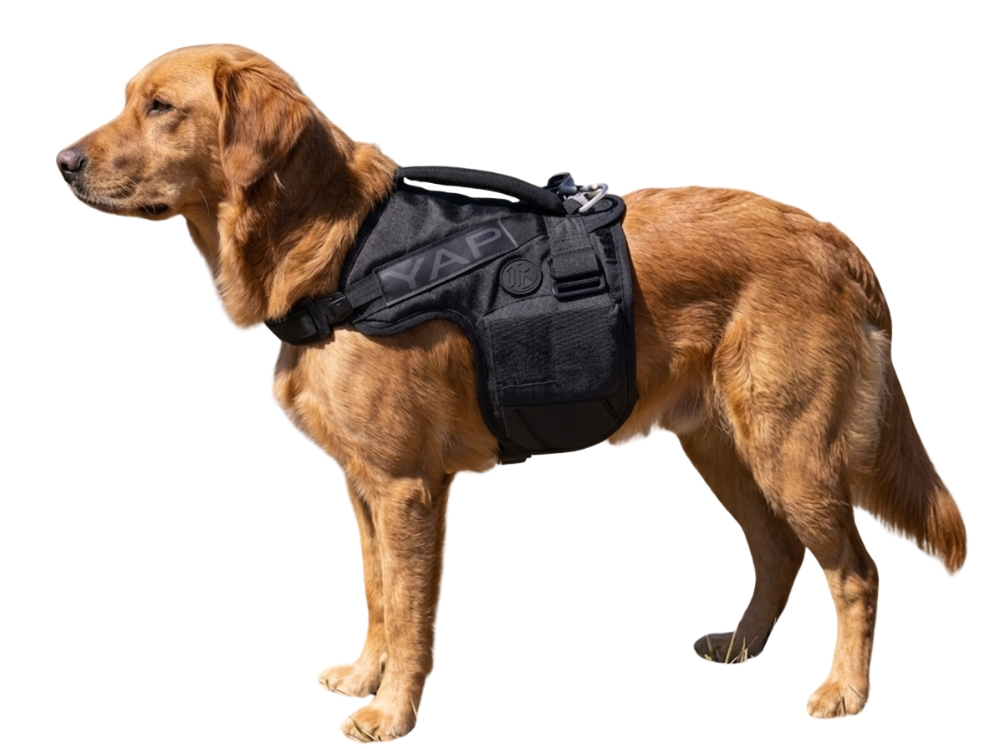
The phrase gets used loosely, so it helps to be precise. A true no pull dog harness does not punish your dog for pulling. It removes the reason pulling causes harm in the first place. Instead of letting leash tension land on a single narrow point at the neck, the harness routes that tension to the chest and shoulders, where muscle and bone can absorb it safely.
YAP USA takes this further with a center of gravity structure. The harness sits at the exact point where your dog’s weight naturally balances, so leash pressure never throws the gait off or pulls the body sideways. The result is a dog that walks in a straight, balanced line rather than one that leans, coughs, and strains against the throat with every step.
A no pull design is not about force. It is about geometry. When pressure lands on the chest instead of the throat, the dog stops feeling the choke reflex that makes pulling worse, and the walk calms down on its own.
2. Why a Harness Protects Better Than a Collar
When a dog lunges against a collar, the pressure concentrates on the neck, where the trachea, thyroid, and major blood vessels sit close to the surface. Over time that repeated strain causes real damage, and small breeds with delicate airways feel it worst of all.
According to the American Veterinary Medical Association, repeated tracheal pressure from collars is linked to a collapsed windpipe, especially in toy and small breeds. A well built harness moves that load to the chest, the strongest part of the frame, so the same pull that would choke a collar wearing dog barely registers. If you want the full breakdown, our guide on dog harness vs collar safety covers it in detail.
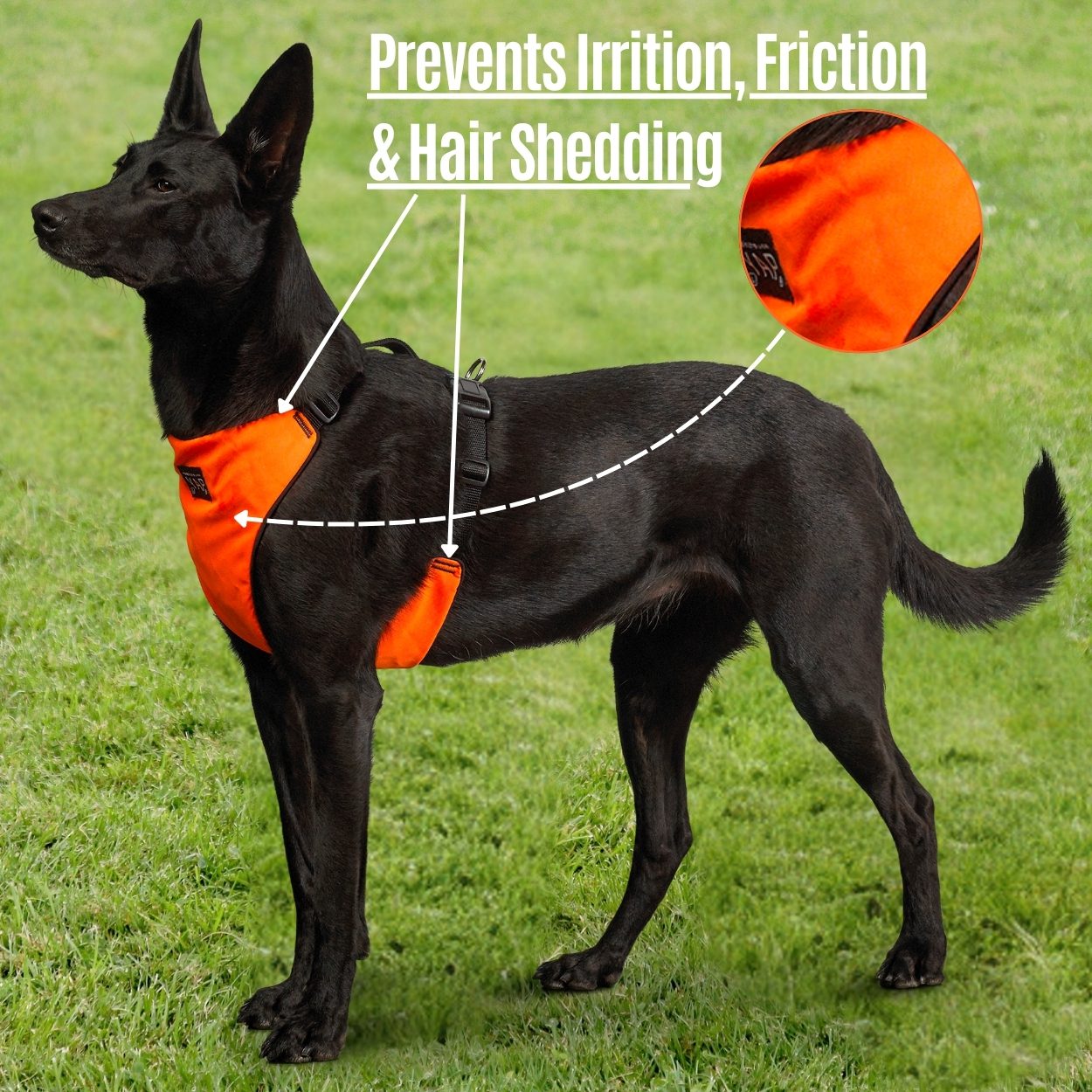
The difference is not subtle. A properly engineered harness protects the trachea, the hips, the spine, and the internal organs during movement. A collar does none of that. For any dog that pulls even slightly, a no pull harness is the safer and more humane choice.
3. Six Features That Define a Real No Pull Harness
Not every product labeled no pull earns the name. Here is what separates a genuine choke free harness from a generic vest.
Choke Free Chest Routing
The chest strap sits below the throat entirely, so leash tension never reaches the windpipe. This is the non negotiable foundation of any no pull design.
Center of Gravity Fit
Pressure spreads across the dog’s natural balance point rather than one spot, keeping the gait even and reducing fatigue for both dog and handler.
Anti Static Fabric
Static buildup startles dogs and disrupts movement. Anti static material keeps the coat calm and free of irritation during walks.
Temperature Control
Active dogs overheat fast. Fabric that regulates heat keeps body temperature stable on long walks and in warm weather.
Secure Adjustable Straps
A harness that slips creates friction and rubbing. Locking adjustment points hold the fit snug without restricting motion.
Emergency Handle
A built in handle lets you guide or lift your dog instantly in a tight spot, with zero pressure on the neck.
Every YAP USA harness builds all six features into the design, made in the USA with reinforced stitching and hardware tested under load. Before you buy, it helps to measure your dog for a harness so the fit is right the first time.
4. Top No Pull Dog Harnesses for 2026
Each harness below was chosen for its engineering, size range, and the safety features that make it a true no pull design. All come from YAP USA’s current lineup.
Techno Harness: Best All Around No Pull Harness
The Techno Harness is YAP USA’s flagship and the most versatile no pull option available. It fits dogs from 8 to 175 pounds, one of the widest ranges on the market, and uses NASA certified Outlast fabric first developed for astronaut spacesuits. That material absorbs heat when your dog runs warm and releases it when they cool, holding a stable temperature without bulk.
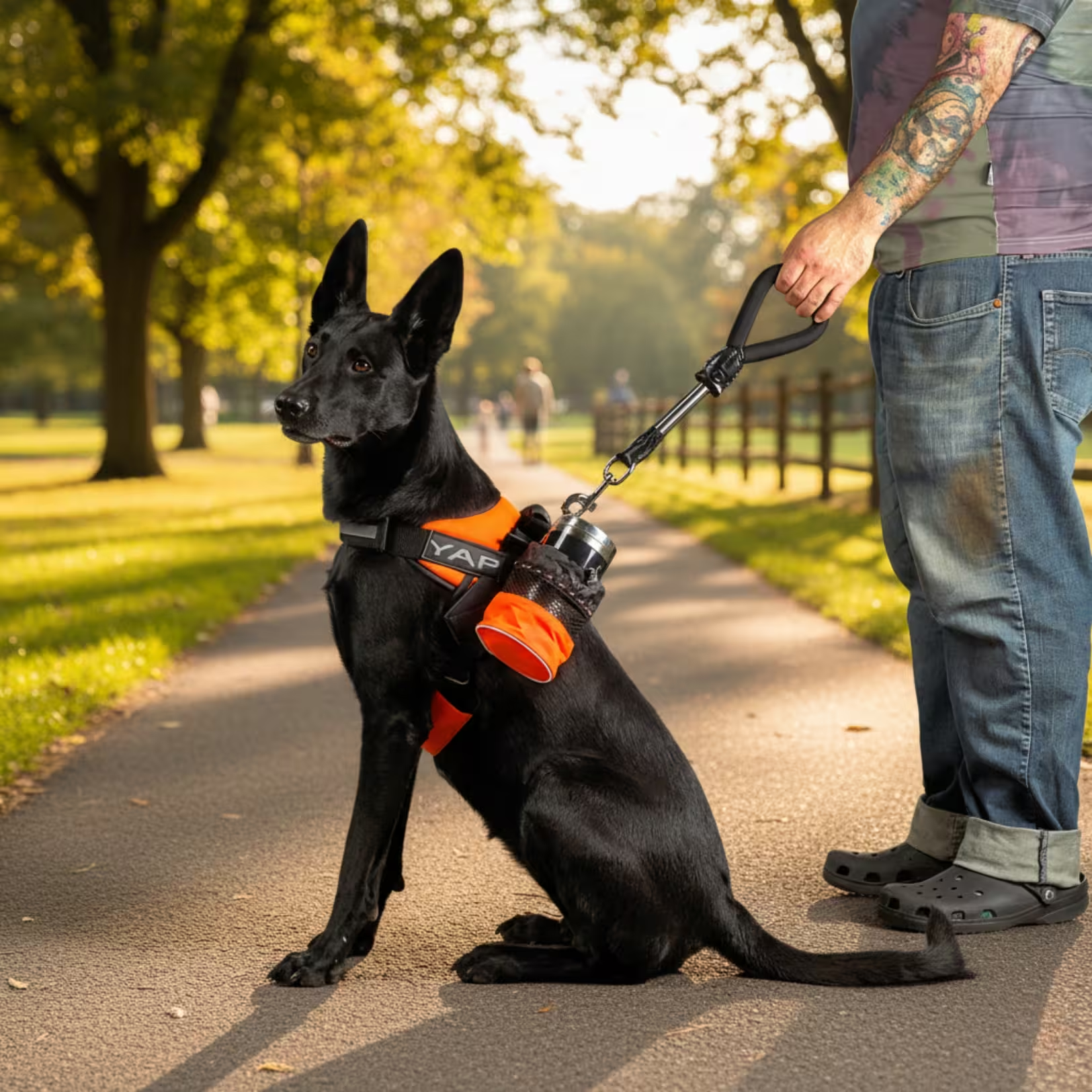
A built in emergency handle lets you steady your dog without any pressure on the neck, and curved buckles sit flat against the body to prevent rubbing. It also clips straight to YAP USA’s Universal Seat Belt for safe car travel. For most households, this is the first harness to consider.
- Fits 8 to 175 lbs
- NASA Outlast temperature control
- Built in emergency handle
- Car seat belt compatible
Baby Beta AirFlow: Best No Pull Harness for Small Dogs
The Baby Beta AirFlow is built for dogs weighing 5 to 40 pounds, covering most toy and small breeds from Chihuahuas to Cocker Spaniels. Small frames are the most vulnerable to throat pressure, so this harness keeps the load completely off the neck even when a little dog lunges hard. Airflow channels keep the body cool, and an internal pocket silences ID tags so the jingling never startles your dog.
- Fits 5 to 40 lbs
- Airflow cooling channels
- Tag silencing pocket
- Fully padded contact points
Beta Noir Package: Best No Pull Harness for Large Breeds
The Beta Noir Package supports dogs from 40 to 175 pounds and was tested with police, military, and American Kennel Club dogs. A reinforced top handle gives close two handed control, and sound canceling components keep movement quiet so a strong puller stays focused on you rather than the noise. For a powerful dog that leans into every walk, this is the harness that holds.

- Fits 40 to 175 lbs
- Reinforced control handle
- Anti static and sound canceling
- Waste bag and bottle holder included
K9i TactiKal: Best No Pull Harness for Working Dogs
The K9i TactiKal is YAP USA’s mission grade harness, made for handlers who need precision and control. It delivers full three axis control through a structured communication handle and suits search work, detection, and daily use with strong dogs. Anti static, silent, and ultra light, it keeps a working dog agile while giving the handler total command.
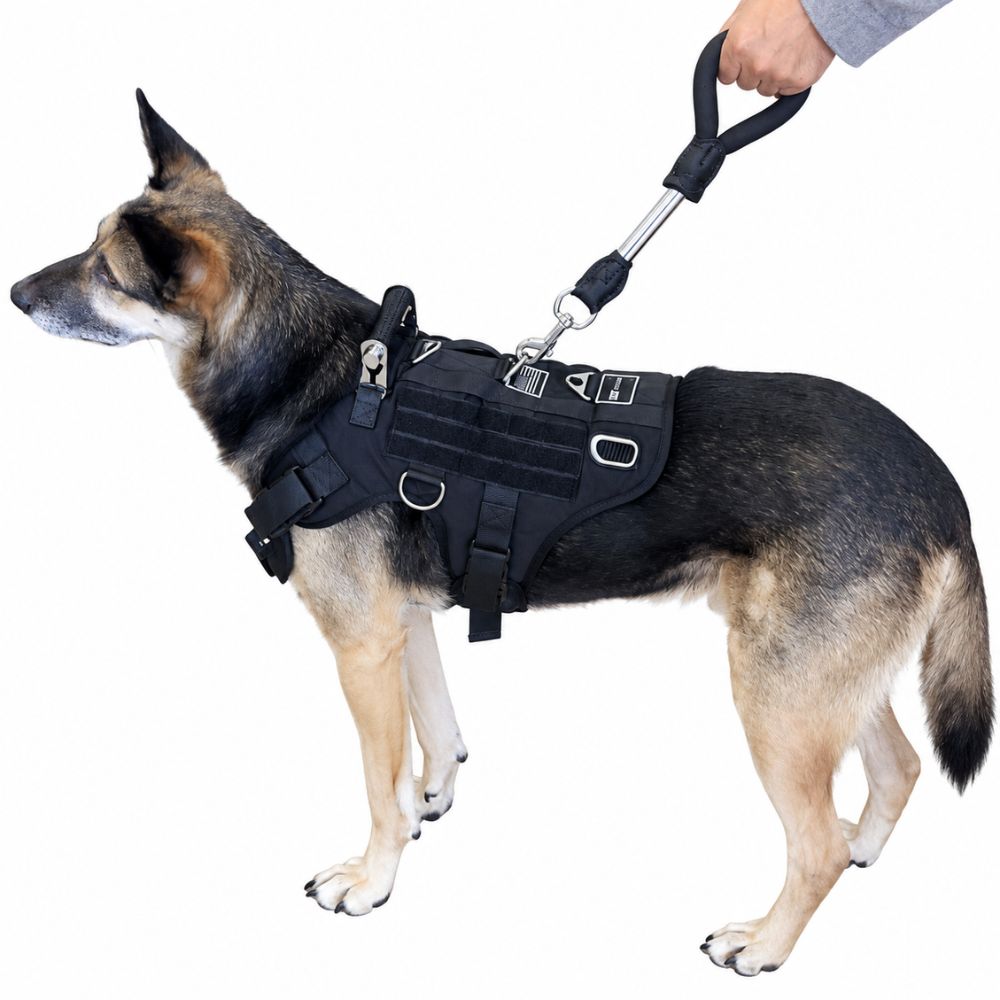
- Three axis communication handle
- Multi point coupling
- Silent anti static build
- Washable for fast cleanup
Find Your Dog’s No Pull Harness
Browse the full lineup of choke free, center of gravity harnesses. Every design is made in the USA and backed by two U.S. patents.
5. No Pull Harness Comparison Table
Use this table to match the right harness to your dog’s size and activity at a glance.
| Harness | Best For | Size Range | Handle | Temperature Control | Car Ready |
|---|---|---|---|---|---|
| Techno Harness | All around use | 8 to 175 lbs | Yes | NASA Outlast | Yes |
| Baby Beta AirFlow | Small dogs | 5 to 40 lbs | No | Airflow | Yes |
| Beta Noir Package | Large breeds | 40 to 175 lbs | Yes | Airflow option | Yes |
| K9i TactiKal | Working dogs | Large / XL | Yes | Airflow option | Yes |
All four use YAP USA’s choke free, center of gravity design, all are made in the USA, and all protect the trachea, spine, hips, and organs from pulling strain. The choice comes down to size, temperament, and activity level.
6. How to Fit a No Pull Dog Harness
Even the best harness only works when it fits right. A loose one slips and chafes, and a tight one restricts breathing. Here is how to get it correct.
Step 1: Measure Before You Order
Measure your dog’s chest girth at the widest point just behind the front legs, then the lower neck where the harness will sit. Match those numbers to the chart on each product page rather than guessing by breed. Our full guide on how to measure a dog for a harness walks through it step by step.
Step 2: Use the Two Finger Rule
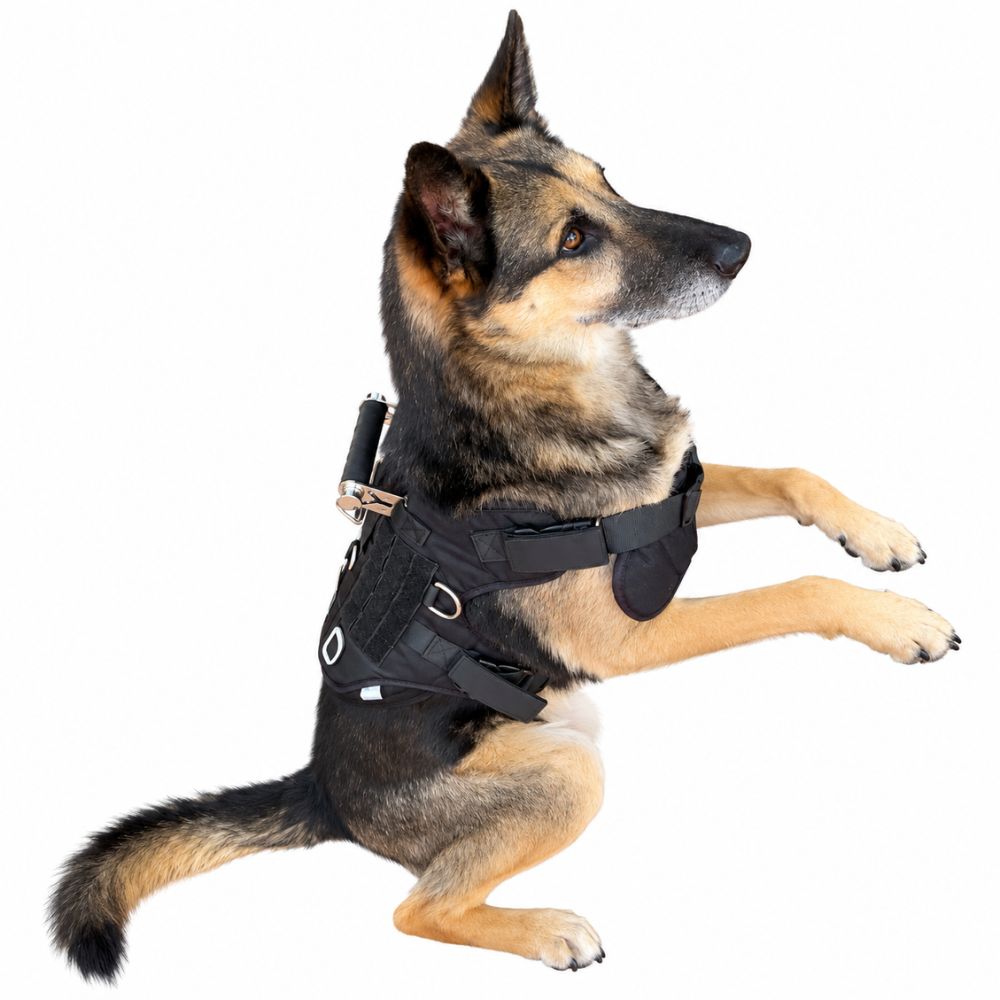
After putting the harness on, slide two fingers under each strap. They should pass through with slight resistance. More than two fingers means it is too loose. Fewer than two means it is too tight. Adjust until every strap passes the test.
Step 3: Watch the Movement
Walk your dog for a few minutes and watch the harness. It should stay in place without rotating or sliding forward, and the back panel should sit flat along the spine. The front straps should never press into the armpits.
Step 4: Check for Rubbing
After the first full walk, check the contact points around the chest and armpits. Any redness or hair loss signals friction, so re adjust or resize before the next outing.
YAP USA provides detailed sizing instructions for every harness. Use them before ordering to get the right fit the first time, and remember that a thirty day exchange covers a size up or down.
7. Frequently Asked Questions
Final Word
The best no pull dog harness is not the one with the longest feature list. It is the one built on real engineering that protects your dog on every walk. Tracheal pressure from a collar causes lasting harm, and a choke free design that spreads the load across the chest changes that completely.
YAP USA has been building that kind of harness since 2002. The Techno Harness is the best all around pick, the Baby Beta AirFlow suits small dogs, the Beta Noir Package handles strong large breeds, and the K9i TactiKal serves working dogs. All are made in the USA, choke free, and backed by two U.S. patents.
“The right harness does not just control your dog. It protects them every single step of the way.”
References
- YAP USA. (2026). Dog Harnesses Product Lineup. yapstores.com
- American Veterinary Medical Association. (2026). Collar and Harness Safety Recommendations. avma.org
- Outlast Technologies. (2026). Phase Change Thermal Regulation. outlast.com
- U.S. Patent No. 10,028,486 B1. YAP USA Choke Free Harness Design.
- U.S. Patent No. 10,321,661 B2. YAP USA Center of Gravity Harness Engineering.