
Dog Harness vs Collar: Which Is Safer for Your Dog?
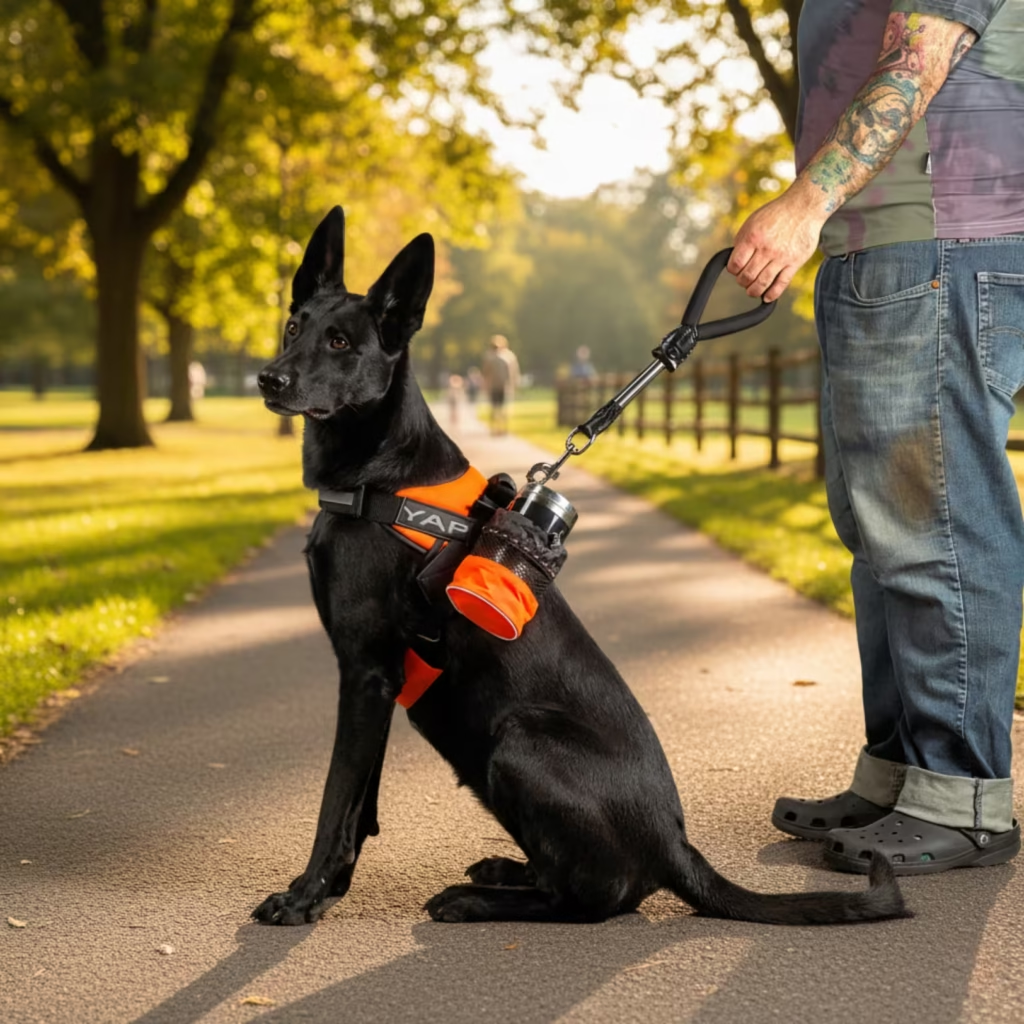
Discover why a dog harness is safer than a collar for your pet. Backed by research and trusted by vets. Shop YAP Stores for the best dog harnesses. Introduction: The Question Every Dog Owner Should Ask Most dog owners pick up a collar at the pet store without giving it a second thought. It feels like the obvious choice. It is simple, cheap, and familiar. But that familiarity may be costing your dog more than you realize. The debate between a dog harness and a collar is not just about preference. It is about measurable health risks backed by peer-reviewed veterinary research. Studies published in 2024 and 2025 confirm that neck collars concentrate dangerous levels of pressure on the trachea, jugular veins, and cervical spine during routine walks. A dog harness eliminates those risks by moving the contact point entirely to the chest and shoulders. This guide walks you through the science, the safety data, and the specific products from YAP Stores that have been engineered over 20 years to protect your dog on every walk. YAP was founded in 2002 in San Francisco with a single mission: to engineer the best product for your dog. That commitment has not changed. By the end of this article, you will know exactly which option is right for your dog, your lifestyle, and your dog’s size and health profile. What Is a Dog Harness and How Does It Work? A dog harness is a set of straps that wraps around a dog’s chest, torso, and shoulders rather than the neck. The leash attaches to a clip on the back, front, or both, depending on the design. The key difference from a collar is distribution. When a dog pulls, a harness spreads that force across the largest, strongest muscles in the dog’s body, the chest and shoulders. Nothing is concentrated at the throat. Modern harnesses also serve functional purposes beyond force distribution. They include emergency handles for quick control, GPS pockets, temperature-regulating fabrics, and tactical attachment points for working dogs. Types of Dog Harnesses What Is a Dog Collar and When Is It Useful? A dog collar is a band of material that sits around the neck. It typically holds ID tags and attaches to a leash. For decades, it was the default walking tool for almost every dog owner. Collars are not without value. They serve well as ID tag holders worn around the house. For dogs that are fully leash-trained and never pull, a flat collar carries minimal risk during walks. The problem begins when pulling, lunging, or sudden movements apply force to the throat. When a Collar Is Acceptable Dog Harness vs Collar: Head-to-Head Safety Comparison The table below compares both options across the factors that matter most to your dog’s long-term health and your control during walks. Factor Dog Harness Dog Collar Pressure Distribution Across chest and shoulders Concentrated at the neck Trachea Protection Full protection — no neck contact High risk with pulling behavior Spine and Neck Safety No cervical stress Potential cervical nerve damage Intraocular Pressure Risk Not associated Jugular compression raises eye pressure Control for Pullers High (especially front-clip) Low — pulling worsens with opposition Escape Risk Low with correct fit Higher — dogs can back out of collars Suitability for Small Breeds Excellent — protects fragile structure Risk of tracheal collapse Suitability for Working Dogs Excellent — tactical versions available Not suitable for active duty Car Travel Safety Compatible with seat belt attachments Not compatible — neck risk in crash Recommended by Vets Yes — for walking and training For ID tags only The Science Behind Collar Dangers The concern about collars is not theoretical. It is backed by measurable data published in peer-reviewed veterinary journals. A study published in Veterinary Medicine and Science in 2025 confirmed that collar contact pressure in dogs reaches 4.58 N/cm2. That figure exceeds the pressure produced by ill-fitting saddles on horses, a welfare issue the equine world has taken seriously for years. More critically, even the lowest collar pressure values recorded in dogs (83 kPa) are significantly higher than the 4.3 kPa threshold that causes tissue damage and necrosis in humans. A separate 2025 review by researchers at the University of British Columbia examined 21 studies on dog restraint devices. The conclusion was clear: for dogs that pull, non-tightening front-clip harnesses offer the best balance between control and reduced physical stress on the dog. Clinical Finding VCA Animal Hospitals state in their tracheal collapse management guidelines: using a harness rather than a collar is essential ongoing care for dogs with tracheal collapse. The condition is progressive and permanent. Prevention through a dog harness is far safer than treatment after the damage occurs. (Source: VCA Animal Hospitals, vcahospitals.com) A Swedish chiropractic study found that out of 400 dogs examined, 252 had misaligned spines. Of those dogs, 65 percent also had behavioral problems. The researchers noted a direct connection between collar-related neck stress and spinal misalignment. This connection between physical discomfort and behavior is not widely discussed but has real implications for how dog owners interpret pulling and reactivity during walks. Additionally, a 2025 study published in Wiley’s Veterinary Medicine and Science confirmed that collar use raises intraocular pressure in dogs by compressing jugular veins at the throat. Elevated intraocular pressure is the defining risk factor for glaucoma — a progressive and irreversible condition. For dogs already prone to eye issues, a collar is a daily risk they do not need. YAP Stores Dog Harness Collection: Every Product Reviewed YAP Stores has been engineering dog harnesses in San Francisco since 2002. Every product in the YAP line is built around a center-of-gravity design principle, which means the attachment point is placed where physics favors the dog rather than where it is easiest to manufacture. Here is a full review of every dog harness in the current collection. 1. Baby Beta AirFlow Tactical Dog Harness — $99.00 The Baby Beta AirFlow is built for small to medium dogs